Ground Work Mastery for Deeper Connection with Your Horse
Building Trust Through Foundation Exercises
The moment you step into the arena with your horse, an invisible conversation begins. Every movement, breath, and gesture creates a dialogue that either builds trust or erodes it. In the dusty arenas of Ridgecrest, where the high desert wind carries stories of countless partnerships forged between human and horse, this conversation becomes the foundation of everything that follows.
Ground work isn’t just preparation for riding (though it serves that purpose beautifully). It’s the cornerstone of genuine partnership, where respect flows both ways and communication transcends words. When done properly, these foundation exercises create a bond that transforms both horse and handler, establishing the trust necessary for advanced work under saddle.
Establishing Personal Space and Boundaries
Personal space defines safety in the horse world. A horse that crowds, pushes, or ignores your physical boundaries isn’t being disrespectful—they’re simply operating without clear guidelines. Your job becomes creating consistent, fair boundaries that make sense to your equine partner.
Start with the bubble concept: imagine a three-foot circle around your body that belongs exclusively to you. When your horse enters this space uninvited, use steady pressure to move them back. This might mean placing your hand on their chest with firm, consistent pressure until they take a step back, then immediately releasing and praising. The timing matters more than the force—horses learn from the release, not the pressure itself.
Practice the “stop and stand” exercise daily. Lead your horse forward three steps, then halt completely. Your horse should stop when you stop, without crowding into your space or continuing forward.
If they don’t, use gentle backward pressure on the lead rope combined with your body language to communicate the halt. Consistency here builds respect that carries over into every aspect of your partnership.
Reading Your Horse’s Body Language
Horses communicate constantly through subtle physical cues that many handlers miss. Learning to read these signals transforms your ground work from basic exercises into meaningful conversation. Watch your horse’s ears—forward ears indicate attention and interest, while pinned ears signal discomfort, irritation, or fear.
The eyes tell another story entirely. A soft, relaxed eye with visible white suggests a calm, trusting horse ready to work. A hard, worried eye with tension around the socket indicates stress that needs addressing before moving forward. Similarly, nostril flare often accompanies excitement or anxiety, while relaxed nostrils suggest a comfortable horse.
Body tension provides crucial feedback during training sessions. A horse carrying tension in their neck, back, or jaw isn’t ready for more challenging work. They need time to process and relax before progressing. Programs that incorporate therapeutic horsemanship principles particularly emphasize this patient approach to reading and responding to equine body language.
Creating Calm Energy and Leadership Presence
Horses mirror our internal state with remarkable accuracy. If you approach ground work feeling rushed, anxious, or distracted, your horse will reflect that energy back to you. Developing calm, confident leadership presence starts with honest self-assessment of your own emotional state.
Practice deliberate breathing before handling your horse. Take five deep breaths, consciously releasing tension from your shoulders, jaw, and hands. This isn’t just relaxation—it’s preparation for clear communication. Your horse reads your breathing pattern, heart rate, and muscle tension as clearly as you might read facial expressions on another human.
Leadership presence comes through consistency, not dominance. When you ask your horse to move their hindquarters over, use the same cue every time. When you request forward movement, maintain the same body position and energy level. This consistency creates trust because horses thrive on predictability. They need to know what to expect from their human partner.
Progressive Desensitization Techniques
Every horse encounters objects, sounds, and situations that trigger fear responses. Progressive desensitization helps them work through these reactions systematically, building confidence along the way. The key lies in working below their fear threshold—close enough to notice the scary object, but not so close that panic takes over.
Start with something mildly concerning, like a plastic bag on the ground. Allow your horse to see and acknowledge it from a comfortable distance. When they show relaxed body language, take one step closer. If tension appears, step back to where they felt comfortable and wait for relaxation to return.
The process requires patience, but creates lasting confidence. Many riders in the horse riding community have discovered that horses trained through progressive desensitization techniques handle trail obstacles, arena equipment, and unexpected situations with remarkable composure. This foundation work pays dividends for years to come, creating horses that remain calm and thinking partners even in challenging situations.
Essential Movement Patterns for Ground Training
Leading with Purpose and Direction
Effective leading goes far beyond simply pulling your horse from point A to point B. The foundation of ground work mastery starts with teaching your horse to follow your intention, not just your physical presence. When you establish clear directional leadership, you create a framework where your horse actively chooses to be with you rather than feeling forced into compliance.
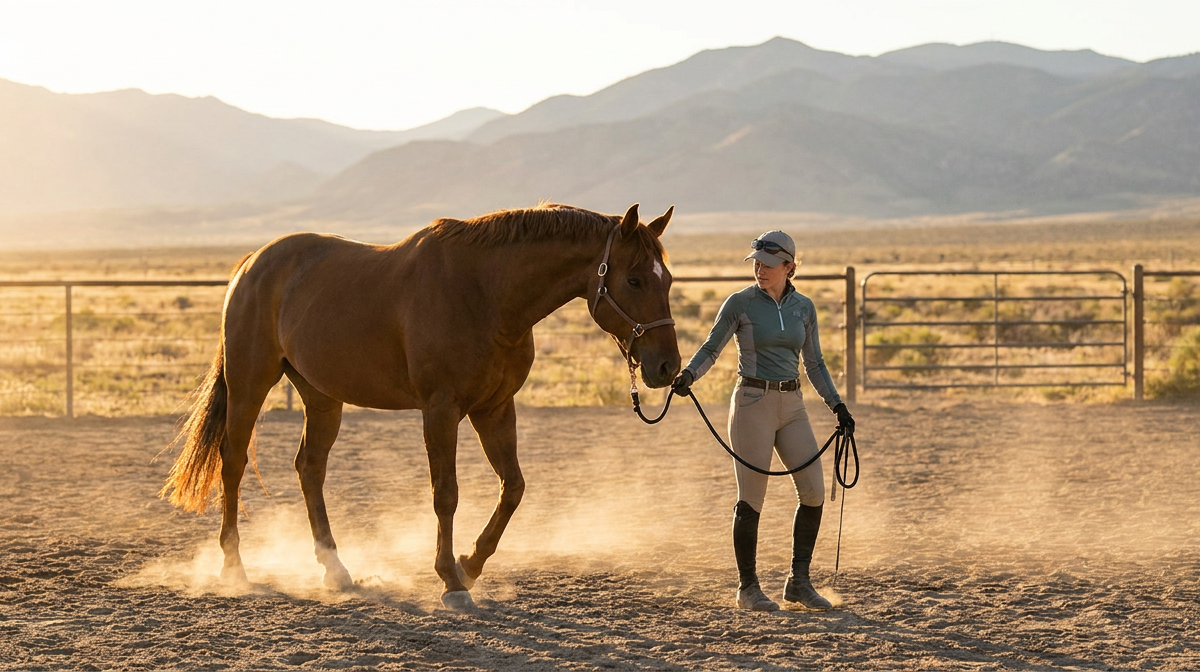
Begin by positioning yourself at your horse’s shoulder, maintaining a confident but relaxed posture. Your energy should communicate direction before your body moves. Practice walking forward with deliberate steps, pausing every few strides to ensure your horse stops when you stop. The goal isn’t mechanical obedience but rather an engaged partner who reads your subtle cues and responds accordingly.
During spring preparation sessions at our Ridgecrest facility, we often see horses transform from distracted followers into attentive partners within just a few focused sessions. The key lies in consistency and timing. Your horse should feel motivated to stay connected with you, not trapped by the lead rope.
Teaching Yielding and Flexion Responses
Yielding exercises form the cornerstone of respectful communication between horse and handler. These movements teach your horse to soften and give to pressure rather than bracing against it. Start with simple lateral flexion, asking your horse to bend their neck toward you using gentle, steady pressure on the halter.
The timing of your release is everything. The moment your horse begins to yield, even slightly, immediately release the pressure. This creates positive associations with giving rather than resistance. Many horses initially push against pressure as a natural response, but consistent practice helps them understand that yielding brings comfort and relief.
Progress gradually to asking for hindquarter yields, where your horse steps their rear end away from gentle pressure applied to their side. This exercise particularly helps establish respect for your personal space while building the foundation for more advanced movements under saddle. Each successful yield should feel effortless, like your horse is choosing to move rather than being forced.
Backing Up with Lightness and Respect
Teaching a horse to back up correctly requires finesse rather than force. Many handlers make the mistake of pulling backward on the lead rope, which actually encourages the horse to lean forward and resist. Instead, position yourself facing your horse and apply gentle pressure to their chest or use rhythmic tapping motions.
Start with asking for just one step backward, immediately releasing pressure and rewarding the response. The backing motion should come from the horse’s hindquarters engaging, not from them simply falling backward to escape pressure. Watch for the subtle shift in weight that indicates your horse is preparing to step back willingly.
Quality matters more than quantity in these exercises. Three clean, willing steps backward are worth more than ten rushed, resistant ones. As your horse becomes more responsive, you can begin asking for backing with increasingly subtle cues, eventually using just your body language and energy to communicate the request.
Lateral Movement and Side-Stepping Exercises
Lateral movements teach your horse to move their body in multiple directions while maintaining balance and attention. Side-stepping exercises help develop the coordination and suppleness that will later translate to better performance under saddle. These movements also reinforce your role as the director of movement and space.
Begin with simple side-passes, asking your horse to step sideways while keeping their body relatively straight. Apply gentle pressure to their side while simultaneously blocking forward movement with your positioning. The horse should cross their legs cleanly, moving away from the pressure without rushing or becoming anxious.
Practice these movements in both directions, as horses often favor one side over the other. Regular horse riding programs emphasize the importance of balanced development, ensuring horses become equally responsive and supple on both sides.
Advanced practitioners can progress to asking for shoulder yields and haunches-in movements from the ground. These exercises require the horse to maintain forward momentum while moving laterally, developing the kind of coordination and responsiveness that creates truly connected partnerships. Remember that each movement should feel like a conversation rather than a demand, building trust and understanding with every session.
Advanced Communication Through Body Language
Pressure and Release Timing Mastery
The magic of effective ground work lives in those split-second moments when you apply and release pressure. Most riders think they understand this concept, but the difference between adequate timing and masterful timing creates completely different training outcomes.
Perfect pressure release happens the instant your horse offers the slightest try in the right direction. Not when they complete the movement, but when they first think about complying. This requires you to read micro-expressions and body shifts that happen in milliseconds.
Start with simple backing exercises to develop your timing. Apply gentle pressure on your horse’s chest and watch for that first backward weight shift. Release immediately, even if they only shift their weight backward without moving their feet. This teaches your horse that thinking in the right direction earns relief, which accelerates learning exponentially.
Advanced practitioners at facilities like ours in Ridgecrest often work with horses that have learned to lean into pressure rather than yield to it. These horses require microsecond timing combined with consistent energy to reshape their responses. The key becomes reading their intention before it becomes action.
Energy Management and Spatial Awareness
Your energy level directly influences your horse’s emotional state and willingness to engage. High-energy handlers often create anxious, reactive horses, while low-energy handlers struggle to command respect and attention.
Effective energy management starts with your breathing and posture. Deep, slow breathing creates calm energy that horses naturally mirror. Square shoulders and planted feet communicate confidence without aggression. But the real skill comes in adjusting your energy level to match what each specific horse needs in each moment.
Spatial awareness means understanding invisible boundaries around both you and your horse. Your horse should respect your personal space without you having to physically defend it. This happens through consistent body positioning and clear directional pressure when they crowd you.
Practice the “bubble exercise” by walking with your horse and maintaining exactly four feet of space between you. When they crowd closer, use directional pressure with your hand or lead rope to guide them back to the correct distance. When they maintain proper distance, let your energy soften to reward their awareness. Many riders discover through spring training tips that spatial awareness becomes the foundation for more advanced work.
Developing Subtle Cue Recognition
Horses naturally communicate through subtle body language shifts, and they expect the same precision from us. Developing subtle cue recognition means both giving clearer signals and reading your horse’s increasingly quiet responses.
Begin by establishing clear physical cues for basic movements. A light touch on the shoulder should mean “move your front end away.” A gentle pressure on the hip should mean “move your hindquarters.” Start with obvious pressure, but gradually lighten your touch until your horse responds to barely perceptible signals.
The goal becomes having your horse respond to your intention before you even apply physical pressure. This happens when they learn to read your body positioning, eye focus, and energy shifts. Advanced horses will often begin moving in response to where you look or how you position your feet.
Watch for your horse’s subtle offering signals too. Ear position changes, slight weight shifts, and eye softening all communicate their willingness to work with you. Acknowledging these small tries builds their confidence and eagerness to communicate.
Building Two-Way Communication Skills
True partnership requires conversation, not just commands. Two-way communication means listening to what your horse tells you while clearly expressing your requests. This creates willing cooperation instead of forced compliance.
Start each session by “checking in” with your horse. Notice their energy level, attention, and emotional state before making any requests. Horses dealing with physical discomfort, environmental distractions, or emotional stress cannot engage fully in training.
Learn to recognize when your horse says “no” versus “I don’t understand.” A pinned ear with tight body language usually means resistance, while confused circling or stopping often indicates unclear communication from you. Responding appropriately to these different types of feedback builds trust and accelerates progress.
Practice “conversation pauses” during your ground work sessions. After asking for a movement, give your horse time to process and respond before repeating or escalating your request. Many behavioral issues stem from handlers who never allow their horse time to think and offer a response. Those interested in horse riding quickly discover that patient communication creates more willing, responsive partners than rushing through exercises ever could.
Problem-Solving Common Ground Work Challenges
Addressing Fear and Anxiety Issues
Fear manifests differently in every horse, but the approach remains consistent. When your horse shows tension through raised head carriage, rapid breathing, or reluctance to move forward, you’re dealing with an emotional response that requires patience rather than pressure. The key lies in creating distance from the trigger while maintaining connection.
Start by positioning yourself where your horse feels comfortable, even if that means working from 15 feet away initially. Use your body language to communicate calm energy through relaxed shoulders and steady breathing. Many riders make the mistake of trying to rush progress during when horses are already dealing with seasonal energy changes.
Reward the smallest signs of relaxation. A lowered head, a soft eye, or even just standing still deserves acknowledgment. This creates positive associations with your presence and gradually builds confidence. Remember that forcing a fearful horse closer to their trigger often creates deeper anxiety patterns that become harder to address later.
Correcting Pushy or Disrespectful Behavior
Pushy behavior typically stems from unclear boundaries rather than true aggression. When horses crowd your space, push through your hands, or ignore your cues, they’re often responding to inconsistent communication from previous handlers. The solution involves establishing clear spatial boundaries without creating fear.
Create a consistent bubble of personal space around yourself, typically arm’s length plus six inches. When your horse enters this space without invitation, immediately redirect them backward using steady pressure rather than sharp corrections. The timing matters more than the intensity of your response.
Practice the “sending away” exercise where you ask your horse to move their hindquarters away from you while maintaining forward energy. This establishes your role as the movement director without suppressing their natural expression. Consistency across all interactions becomes crucial because horses learn through repetition and clear patterns.
Ground work sessions should reinforce these boundaries every time you interact. Even simple tasks like leading from the barn require maintaining your established space and expecting respectful responses to your directional cues.
Working with Horses Who Lack Confidence
Confidence-building requires breaking down every request into smaller, achievable steps. Horses who hesitate, freeze, or constantly look for reassurance need success experiences that gradually expand their comfort zone. This process works differently for each individual, but the principles remain universal.
Start with exercises your horse already knows well, then add tiny variations. If your horse confidently walks beside you in the arena, try the same exercise with a slightly different path or pace. Build complexity only after achieving relaxed compliance with simpler requests.
Use environmental challenges to develop problem-solving skills. Place ground poles, cones, or tarps in your workspace and allow your horse to investigate at their own pace. Many horse riding programs emphasize this investigative approach because it builds genuine confidence rather than forced compliance.
Celebrate curiosity over perfection. When your horse chooses to explore something new, even if they don’t complete the task exactly as planned, acknowledge their willingness to try. This creates horses who actively participate in their training rather than simply following commands.
Overcoming Previous Training Conflicts
Horses with conflicting training backgrounds often display confusing responses where they seem to understand but hesitate or offer multiple behaviors simultaneously. These horses require patient retraining that addresses their underlying confusion without creating additional stress.
Begin by identifying which cues produce consistent responses and build from there. Often, horses understand pressure and release timing but have learned different meanings for specific signals. Rather than fighting existing patterns, incorporate them into your new communication system where possible.
Establish new cue sequences that don’t conflict with previous training. If your horse was taught to back up from chest pressure but you prefer using the lead rope, practice the new method in completely different contexts initially. This prevents the horse from having to choose between conflicting instructions.
Time becomes your greatest tool when working through training conflicts. Allow extra sessions for horses to process new information and don’t expect immediate transitions between different training philosophies. Some horses need weeks to fully trust new handling methods, especially if previous experiences created defensive responses.
Progress comes through consistency rather than intensity. Each session should end with your horse understanding at least one clear communication, even if overall progress seems slow. This methodical approach prevents the frustration that often derails retraining efforts.
Creating Structured Training Sessions
Designing Progressive Exercise Sequences
Effective horse ground work builds like a well-constructed house, with each exercise creating the foundation for the next. Your structured training sessions should follow a logical progression that gradually increases complexity while reinforcing established skills.
Start each session with basic yielding exercises. Begin with simple backward pressure on the halter, asking your horse to step back one step at a time. Once this becomes fluid (usually after 3-4 sessions), progress to lateral movement by applying gentle pressure at the horse’s shoulder. The key here is patience – rushing these foundational movements creates confusion rather than connection.
Build your sequence around the “Three Zones” approach. Zone One focuses on respect and personal space, Zone Two develops lateral movement and flexibility, and Zone Three addresses forward motion and energy control. A typical 20-minute session might spend 5 minutes in each zone, with 5 minutes dedicated to integration work where all three elements combine.
The beauty of progressive sequences lies in their adaptability. If your horse struggles with lateral yielding, spend an extra week mastering hindquarter disengagement before moving to shoulder control. This patience creates the deep trust that makes advanced horse riding possible.
Timing and Duration for Optimal Learning
Horse brains process information differently than human brains, and your training schedule should reflect this reality. Research shows horses learn best in short, frequent sessions rather than marathon training blocks.
The “20-minute rule” works beautifully for ground work. Most horses maintain peak attention for 15-20 minutes before mental fatigue sets in. Pushing beyond this window often creates resistance and undoes previous progress. Better to end on a positive note and return tomorrow than to create negative associations through overwork.
Timing within each exercise matters just as much as overall session length. When asking for hindquarter disengagement, apply pressure for no more than 3-4 seconds initially. The moment your horse shifts weight or takes a step in the correct direction, release immediately. This precise timing – pressure, response, immediate release – creates the clear communication that builds connection.
Consider your horse’s individual attention span too. Young horses might need sessions shortened to 10-12 minutes, while experienced horses can handle the full 20 minutes. Watch for signs of mental fatigue: ear pinning, increased tension, or slow responses to familiar cues all indicate it’s time to wrap up.
Incorporating Play and Enrichment Elements
Ground work doesn’t have to feel like drill practice. Incorporating play elements keeps sessions engaging while still achieving training goals. This approach works particularly well for horses who tend toward anxiety or boredom.
Target training adds a game-like quality to ground work sessions. Using a simple cone or ball, teach your horse to touch the target with their nose. This exercise develops focus and precision while creating positive associations with the training environment. Start with the target just inches from the horse’s nose, gradually increasing distance as confidence builds.
Liberty work in a small paddock provides natural enrichment opportunities. Allow your horse to move freely while practicing your body language communication. Can you invite approach using only your posture and breathing? Can you redirect movement without physical contact? These skills translate directly to better connection under saddle.
The team at c and c often uses obstacle courses during ground work sessions. Simple elements like poles on the ground or small jumps create problem-solving opportunities that engage your horse’s mind while building confidence and trust.
Measuring Progress and Adjusting Approach
Progress in ground work isn’t always linear, and having clear metrics helps you adjust your approach when needed. Keep a simple training log noting your horse’s response time to cues, overall energy level, and any breakthrough moments.
Response consistency provides the clearest progress indicator. In early sessions, your horse might respond to backing cues 6 out of 10 times. By week three, you should see 9 out of 10 correct responses with lighter pressure required. This consistency indicates genuine understanding rather than coincidental compliance.
Emotional state changes often precede behavioral improvements. Notice when your horse begins approaching you in the pasture instead of waiting to be caught. Watch for softer expressions around the eyes and more relaxed body posture during sessions. These subtle shifts indicate developing trust and connection.
When progress stalls, resist the urge to increase pressure or duration. Instead, break exercises into smaller components or return to previously mastered skills to rebuild confidence. Sometimes a week of basic exercises creates the foundation needed for the next breakthrough in your partnership.
Transitioning Ground Skills to Under-Saddle Success
Connecting Ground Responses to Riding Aids
The magic happens when your horse’s ground work responses seamlessly translate to under-saddle communication. That same pressure-and-release timing you’ve mastered on the ground becomes the foundation for every riding aid you’ll use.
When your horse moves away from pressure at your hand during ground work, they’re learning the same concept that applies to leg pressure under saddle. The lateral flexion you’ve practiced with lead rope pressure directly translates to rein contact. Your horse already understands the language – you’re simply changing the delivery method.
Start by maintaining the same energy and intention you used during ground work. If your horse responded to subtle body language shifts while leading, they’ll recognize that same focused energy when you’re in the saddle. The key lies in consistency between your ground signals and mounted cues.
Practice mounting and dismounting multiple times before riding, reinforcing that same respectful distance and attention you established on the ground. Your horse should stand quietly, maintaining the same engaged but relaxed state they learned during your ground sessions.
Building Confidence Before Mounting
Never rush the transition from ground to saddle. Your horse’s confidence under saddle depends entirely on their trust in your ground leadership. If they’re still testing boundaries or showing anxiety during ground work, those issues will amplify once you’re mounted.
Spend extra time with desensitization work around the mounting block. Your horse should stand perfectly still while you move around, lean over, and put weight in the stirrup. This isn’t just about safety – it’s about maintaining the respectful relationship you’ve built.
Use the same voice tones and energy levels that worked during ground training. If your horse became calm and focused with quiet, consistent communication on the ground, maintain that same approach when preparing to ride. Sudden changes in your energy or communication style can undo weeks of progress.
Consider the environment where you’ve done most of your ground work. Starting your under-saddle work in that same familiar space helps your horse connect their ground training success with this new challenge.
Maintaining Leadership from the Saddle
Your leadership role doesn’t change when you mount – it evolves. The clear boundaries and consistent expectations you established during ground work must continue under saddle, though the methods might shift slightly.
Maintain the same mental engagement you required during ground sessions. Your horse shouldn’t suddenly become lazy or inattentive just because you’re riding. That forward movement and willingness to work you cultivated on the ground should carry over naturally.
Address small issues immediately, just as you did during ground work. If your horse starts leaning on the bit or ignoring leg pressure, correct it promptly rather than letting bad habits develop. The respect they learned to show your space and leadership on the ground applies equally to respecting your aids while riding.
Your body language remains crucial even from the saddle. Horses read tension, confidence, and intention just as clearly whether you’re on the ground or mounted. Maintain that same calm, assertive presence that made your ground work successful.
Long-Term Relationship Development Strategies
Building a lasting partnership means continuing ground work throughout your horse’s training, not abandoning it once riding begins. Regular ground sessions reinforce your leadership and keep communication sharp.
Vary your routine to prevent boredom and maintain mental engagement. Some days focus on liberty work, others on detailed ground exercises. This variety keeps your horse thinking and prevents the relationship from becoming mechanical.
Watch for subtle changes in your horse’s responses that might indicate confusion, physical discomfort, or growing disrespect. Address these issues immediately through targeted ground work rather than hoping they’ll resolve under saddle.
The strongest horse-rider partnerships develop over months and years of consistent, thoughtful interaction. Each session builds on the last, creating layers of trust and understanding that make both ground work and riding more enjoyable and successful.
At C and C Training Stables, we understand that ground work mastery creates the foundation for every successful riding partnership. Whether you’re working with a young horse or rebuilding trust with an experienced partner, our comprehensive programs support both horse and rider through every stage of development. The investment you make in quality ground work pays dividends for years to come, creating the deep connection and mutual respect that makes horse riding truly exceptional.