Establishing Clear Boundaries Through Positive Horse Training Methods
Understanding the Foundation of Boundary Setting in Horse Training
Watch a seasoned horse trainer work, and you’ll notice something remarkable: they never seem to raise their voice or force compliance, yet their horses respond with immediate respect and attention. This isn’t magic – it’s the result of establishing clear boundaries through positive training methods that create genuine partnership rather than fear-based submission.
The difference between a horse that respects boundaries and one that pushes against them often comes down to how those boundaries were initially established. In the desert training facilities around Ridgecrest, where the relationship between horse and rider can mean the difference between a successful ride and a dangerous situation, understanding these foundational principles becomes even more critical.
What Boundaries Mean in the Horse-Human Relationship
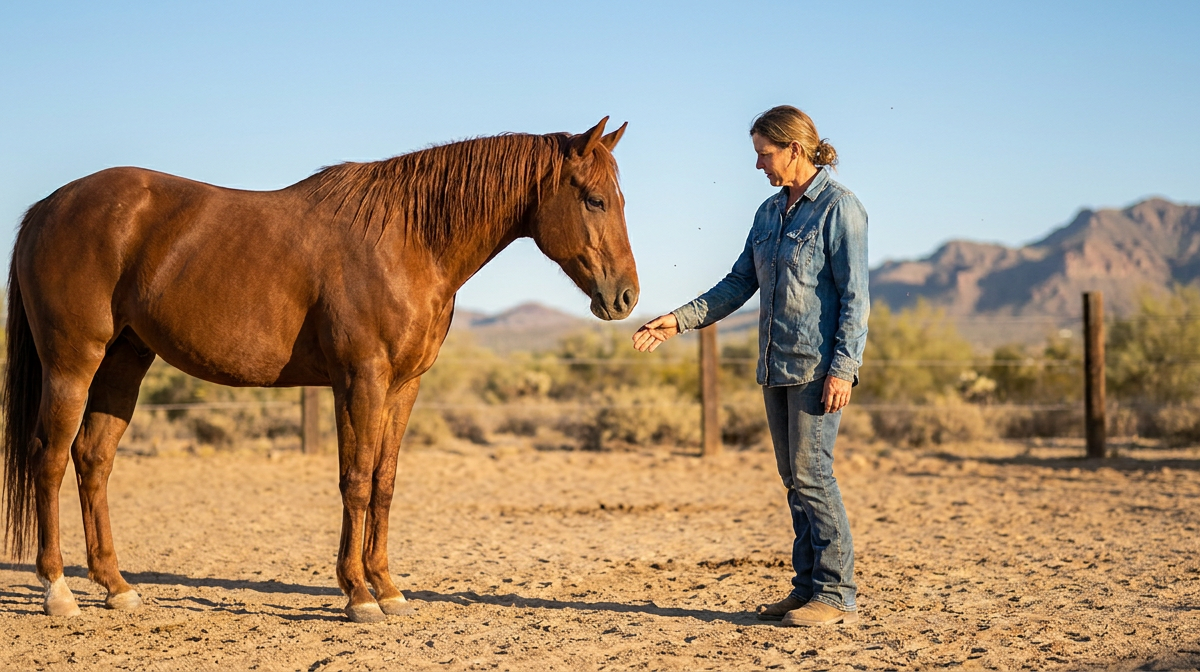
Boundaries in horse training aren’t about dominance or control – they’re about creating a framework of mutual understanding where both horse and human know exactly what to expect from each other. Think of boundaries as invisible guidelines that define personal space, acceptable behaviors, and communication protocols between species.
A well-established boundary system allows horses to feel secure because they understand the rules. When a horse knows that stepping into your personal space requires an invitation, or that pulling on the lead rope won’t get them to their destination faster, they can relax into the relationship without constantly testing limits.
Professional trainers recognize that positive horse training methods work because they tap into natural equine psychology. Horses are herd animals with clear social structures, and they actually prefer having defined roles and expectations. The key difference in positive training is that these boundaries are established through consistent communication and reward systems rather than punishment or intimidation.
Consider how horses interact naturally: they use body language, spatial pressure, and energy levels to communicate boundaries with each other. A successful trainer learns to speak this same language, using subtle shifts in posture and consistent responses to create the same clear communication horses understand instinctively.
The Science Behind Horse Learning and Respect
Horse brains are wired for pattern recognition and association, which makes them incredibly responsive to consistent training approaches. When horses experience predictable consequences for their actions, they develop trust in their handler’s leadership – not through fear, but through reliability.
Research in equine psychology shows that horses learn fastest when they can predict outcomes. A horse that learns pushing against pressure results in increased pressure (and releasing to pressure brings relief) quickly understands the communication system. This principle forms the foundation of all effective horse training boundaries.
The release of pressure becomes the reward, creating what behaviorists call negative reinforcement – not negative in the emotional sense, but in the technical sense of removing something (pressure) to strengthen a behavior (compliance). When combined with positive reinforcement like treats or praise, this creates a comprehensive communication system.
Stress hormones play a crucial role in how horses process boundary training. High-stress situations flood their system with cortisol, making learning difficult. Positive training methods keep stress levels manageable, allowing horses to think clearly and make good decisions rather than simply reacting from fear.
Common Boundary Issues and Their Root Causes
Most boundary problems stem from inconsistency in human behavior rather than deliberate defiance from horses. When handlers sometimes allow a behavior and sometimes don’t, horses naturally test to find where the actual boundary lies.
Crowding is perhaps the most common issue – horses that step into personal space, push with their shoulders, or refuse to back up when asked. This typically develops when handlers inadvertently reward the behavior by backing away themselves or failing to consistently address the invasion of space.
Leading problems often reflect unclear communication about speed and direction. A horse that pulls ahead or drags behind is usually responding to mixed signals about where they should position themselves relative to their handler. These issues become more pronounced when handlers use inconsistent pressure or timing in their corrections.
Ground manners during grooming, tacking, and handling routines frequently break down when horses haven’t learned that fidgeting or moving away isn’t acceptable. The root cause is often handlers who work around the horse’s movement rather than establishing the expectation of stillness first.
Building Trust While Maintaining Leadership
The most successful approach to therapeutic horsemanship balances clear expectations with emotional safety. Horses need to know their handler will provide consistent, fair guidance without ever becoming unpredictable or harsh.
Leadership in positive horse training means becoming the most reliable, trustworthy presence in the horse’s environment. This requires handlers to manage their own emotions, maintain consistent energy levels, and respond to situations with calculated intention rather than reactive emotion.
Trust develops through thousands of small interactions where the handler proves reliable. Each time pressure is applied fairly and released promptly when the horse responds correctly, the relationship deepens. Horses begin to seek guidance from handlers they trust, making boundary enforcement feel more like cooperation than compliance.
The foundation laid through positive boundary setting creates horses that are confident partners rather than fearful followers, setting the stage for advanced training that builds on mutual respect and clear communication.
Core Principles of Effective Boundary Training
Consistency in Communication and Expectations
The foundation of successful boundary training lies in maintaining consistent communication every single time you interact with your horse. This means using the same voice commands, body language, and pressure cues across all training sessions. When you ask for a horse to stop, back up, or move sideways, your approach should remain identical whether you’re working in the round pen or preparing for a trail ride.
Horses learn through repetition and clear patterns. If you allow pushy behavior during feeding time but correct it during grooming, you’re creating confusion rather than understanding. Professional trainers understand that every interaction becomes a training opportunity. The horse that respects your space while you clean their stall will naturally respect your boundaries under saddle.
Building these patterns requires patience, especially during the initial stages when horses test newly established boundaries. A horse might push against your hand one day and respect your space the next. Consistency means responding the same way every time until the behavior becomes automatic. This approach creates mental stability for your horse and builds the trust necessary for more advanced training techniques.
Timing Your Corrections and Rewards
Perfect timing separates effective trainers from those who struggle with behavioral issues. Horses live in the immediate moment, so your response window is typically three to five seconds maximum. Miss that window, and your horse won’t connect your correction with their behavior.
When a horse invades your personal space, your correction needs to happen instantly. This might be a firm “no” combined with a step toward the horse or a gentle push on their chest. The key is applying just enough pressure to communicate your message without creating fear or defensive reactions. Too little pressure gets ignored; too much pressure creates anxiety that interferes with learning.
Rewards work the same way. The moment your horse gives you the desired response, they need immediate acknowledgment. This could be a release of pressure, a verbal praise, or a gentle pat. Many trainers focus on seasonal but miss the daily moments where proper timing builds lasting respect and partnership.
Advanced trainers develop an intuitive sense for these microseconds of opportunity. They learn to read the subtle shift in a horse’s weight that indicates they’re about to move, allowing them to redirect energy before unwanted behavior fully develops.
Reading Your Horse’s Body Language and Responses
Understanding equine body language transforms boundary training from a mechanical process into true communication. A horse’s ears, eyes, and posture tell you everything about their emotional state and willingness to accept your leadership. Pinned ears often signal resistance or discomfort, while forward ears indicate attention and engagement.
Watch for subtle signs that indicate your training approach needs adjustment. A horse that repeatedly turns their hindquarters toward you might be feeling overwhelmed by pressure. One that consistently avoids eye contact could be shutting down emotionally. These responses require different training strategies than overt pushiness or aggression.
Physical tension reveals mental state. A horse with a rigid neck and tight jaw is processing stress differently than one with soft eyes and relaxed muscles. Successful boundary training addresses both the physical behavior and the underlying emotional response. This creates lasting changes rather than temporary compliance.
The most challenging horses often have complex emotional backgrounds that require patient, skilled handling. Experienced training facilities understand that reading these subtle cues takes years to master but forms the foundation of all successful horse-human relationships.
Creating Clear Physical and Mental Spaces
Establishing boundaries requires creating distinct zones around your body that your horse learns to respect. Your personal space typically extends about three feet in all directions, though this varies based on the situation and your horse’s energy level. Teaching horses to honor this invisible boundary prevents dangerous behaviors like crowding, stepping on feet, or knocking you over during excitement.
Mental space proves equally important. Horses need to learn when to focus on you and when they can relax and ignore you. A horse that constantly seeks attention becomes as problematic as one that completely disengages. Training horses to “tune in” on command and “tune out” when appropriate creates a balanced partnership where both species can function comfortably.
Ground work exercises establish these concepts before you ever get in the saddle. Simple exercises like backing up on command, moving shoulders away from pressure, and standing quietly while tied build the foundational respect that transfers to all other training activities. These basic skills prevent most boundary issues before they develop into serious behavioral problems that require professional intervention.
Ground Work Techniques for Establishing Respect
Leading Exercises That Build Proper Distance
Leading exercises form the foundation of establishing clear boundaries with horses while maintaining a positive training environment. The key lies in creating consistent expectations about personal space without resorting to force or intimidation tactics.
Start with basic leading at arm’s length, maintaining approximately three feet between you and your horse’s shoulder. This distance allows you to guide effectively while establishing that your personal space remains yours. When your horse crowds into your space, simply halt and ask them to step back using gentle pressure on the lead rope combined with a raised hand gesture.
Practice directional changes that reinforce your leadership role. Sharp turns to the right require your horse to yield their hindquarters and respect your movement path. These exercises teach horses that you control the direction and pace of movement, creating a natural hierarchy based on clear communication rather than dominance.
Advanced leading work includes backing up together, where you walk backward while your horse mirrors your movement forward. This exercise builds incredible trust and responsiveness, as horses must pay close attention to your body language and energy. The mental engagement required prevents horses from becoming pushy or disrespectful during routine handling.
Pressure and Release Methods for Space Management
Understanding pressure and release timing becomes crucial when establishing boundaries through positive methods. Horses learn through the release of pressure, not the application of it, making timing absolutely essential for successful boundary training.
Begin with the lightest possible pressure when asking your horse to move away from your space. Use your energy field first, then progress to gentle touch, and finally to firmer pressure only if needed. The moment your horse responds correctly by moving away, immediately release all pressure and reward the behavior.
Consistent application means using the same pressure sequence every time. If you sometimes allow your horse to ignore light pressure and other times escalate immediately to firm pressure, you create confusion and anxiety. Spring training approaches that focus on building these foundational responses create lasting behavioral changes without stress.
Practice pressure and release during grooming sessions by teaching your horse to move their body parts away from gentle pressure. This creates micro-moments of boundary respect that accumulate into overall improved manners and cooperation.
Handling Exercises for Personal Boundary Training
Personal boundary training through handling exercises teaches horses to respect human space while remaining calm and engaged. These exercises build trust while establishing clear expectations about appropriate behavior during human interaction.
Shoulder yielding exercises teach horses to move away from pressure applied to their shoulder area. Start with light finger pressure, ask for one step sideways, then immediately release and reward. Gradually increase the number of steps requested while maintaining the light pressure approach.
Practice touching exercises where you systematically touch different areas of your horse’s body while they remain still and relaxed. This builds tolerance for handling while teaching horses that they must control their impulses to move away or lean into pressure.
Work on picking up feet calmly and holding them for extended periods. This exercise requires horses to balance on three legs while trusting you completely with their vulnerability. The trust building aspect makes this particularly valuable for boundary establishment.
Teaching Your Horse to Stand Calmly and Quietly
Standing still represents one of the most important boundary behaviors horses can learn. A horse that stands quietly demonstrates respect for human space and shows mental calmness under various circumstances.
Begin with short duration stands, gradually increasing time as your horse’s patience improves. Use a verbal cue like “whoa” combined with a hand gesture to signal the expected behavior. Reward immediately when your horse stops and maintains position.
Practice standing exercises in different locations to generalize the behavior. Horses that stand quietly only at home haven’t truly learned the concept. Work in various environments around your training facility to build reliable responses regardless of distractions.
Many riders in horse riding discover that horses trained to stand calmly become safer and more enjoyable partners for both ground work and riding activities. This fundamental skill transfers to mounting, grooming, veterinary care, and countless other interactions.
Progressive Desensitization for Boundary Reinforcement
Progressive desensitization strengthens boundary training by teaching horses to remain calm and respectful even when facing challenging or unusual stimuli. This approach builds confidence while reinforcing personal space expectations.
Start with mild stimuli like plastic bags or tarps at a distance, gradually decreasing distance as your horse remains calm and maintains proper position relative to you. The key involves keeping your horse under threshold where they can think and respond rather than react instinctively.
Combine desensitization work with boundary exercises by requiring your horse to maintain proper distance even when distracted or slightly concerned. This dual focus creates horses that respect boundaries consistently, regardless of environmental pressures.
Progressive training builds mental resilience alongside physical boundaries. Horses learn that maintaining calm behavior and respecting human space leads to positive outcomes, even in challenging situations. This emotional stability becomes the foundation for advanced training and creates safer interactions for everyone involved.
Under Saddle Boundary Applications
Maintaining Forward Movement and Attention
Forward movement creates the foundation for all under saddle boundary work. Without consistent forward energy, horses learn they can avoid requests through stalling, backing up, or simply becoming unresponsive. The key lies in establishing that forward is the default expectation, not an occasional request.
Start with clear leg aids that mean “move forward immediately.” Many riders make the mistake of escalating pressure gradually, which teaches horses to ignore initial cues. Instead, use a light leg aid followed immediately by a stronger correction if needed. This creates a clear boundary: the first request gets answered, or consequences follow.
Attention boundaries require consistent focus on the rider rather than distractions in the environment. When horses look away, turn toward other horses, or fixate on barn doors, redirect their attention immediately. Use gentle rein contact combined with leg pressure to bring focus back to the task. This boundary prevents dangerous situations where horses might spook or bolt toward perceived escapes.
Establishing Rider Space and Seat Security
Physical boundaries around the rider’s position prevent horses from invading personal space through crowding, pushing, or attempting to unseat riders. These behaviors often stem from horses testing leadership rather than true aggression, making consistent correction essential.
Seat security starts with teaching horses to respect the rider’s balance and position. If a horse tries to rub against posts, duck under branches, or crowd other horses while carrying a rider, immediate correction establishes that the rider’s safety takes priority. Use one rein to move the horse away from obstacles while maintaining forward movement.
Shoulder boundaries prevent horses from drifting sideways or falling in during circles and corners. When horses lean on leg pressure or ignore steering cues, they’re essentially pushing through established boundaries. Correct this by using inside leg to push the horse back to the rail, followed by immediate release when they respond. This approach using horse riding training methods builds respect for spatial boundaries without creating tension.
Managing Pulling, Rushing, and Evasive Behaviors
Pulling behaviors represent direct challenges to rider authority and require immediate, consistent responses. Horses that lean on bits, pull riders forward, or ignore halt commands are testing whether boundaries truly exist under saddle.
Address pulling through strategic give-and-take rather than constant backward pressure. When horses pull, use intermittent rein pressure that releases the moment they soften. This teaches horses that pulling creates uncomfortable pressure while yielding brings immediate relief. Constant pulling creates deadened mouths and escalated resistance.
Rushing behaviors often indicate anxiety or avoidance patterns. Rather than simply holding horses back, identify what triggers the rushing. Are they anticipating jumps, trying to return to the barn, or avoiding specific areas? Address the root cause while establishing clear speed boundaries through half-halts and transitions.
Evasive behaviors like head tossing, mouth opening, or sideways movement require immediate redirection back to the requested task. Don’t allow horses to solve problems through avoidance. Instead, break down complex requests into simpler components while maintaining the boundary that evasion isn’t acceptable.
Building Responsive Transitions and Halt Work
Transitions create clear communication boundaries between gaits and energy levels. Horses that anticipate transitions, ignore aids, or provide rough transitions are demonstrating unclear boundaries around rider requests.
Quality halt work establishes fundamental respect for rider authority. A proper halt means immediate stopping when requested, standing still until asked to move, and maintaining attention on the rider. Horses that walk through halt aids, fidget constantly, or ignore preparation signals need boundary reinforcement.
Practice halt-to-walk transitions repeatedly, correcting any deviation from the expected response. If horses move before being asked, immediately halt again. This repetition clarifies that movement happens only when requested, not when horses decide they’re ready.
Progressive training builds from simple walk-halt transitions to more complex gait changes. Each transition becomes an opportunity to reinforce boundaries around timing, responsiveness, and rider authority. The training approach emphasized in programs like why march focuses on building these foundational boundaries that support advanced work later.
Successful boundary work under saddle requires consistency across all riding sessions. Horses quickly learn when boundaries are negotiable versus non-negotiable, making every interaction an opportunity to reinforce positive training principles while maintaining clear expectations.
Addressing Challenging Behaviors Through Boundary Work
Dealing with Pushy or Dominant Horses
Pushy horses often test boundaries by crowding your space, pushing against you, or demanding attention through physical pressure. This behavior typically stems from unclear leadership rather than true dominance. The key lies in consistent, calm responses that redirect their energy without creating confrontation.
Start by establishing your personal bubble through body language and positioning. When a horse pushes into your space, immediately step toward their shoulder while raising your energy level. This creates gentle pressure that encourages them to yield without using force. Timing becomes critical here because you must release the pressure the moment they take even one step backward.
Ground work exercises like backing and lateral movement help establish respect for your space. Practice asking your horse to move away from light pressure applied to different parts of their body. Many trainers in horse riding find that horses who learn to respond to subtle cues become much more respectful partners.
Consistency proves more important than intensity when working with pushy behaviors. Every interaction becomes a training opportunity, so maintain the same boundaries whether you’re leading to pasture or preparing for advanced work.
Managing Fear-Based Boundary Testing
Fear-based boundary testing looks different from pushy behavior but requires equally clear responses. Anxious horses might invade your space while seeking comfort, or they might test boundaries through nervous energy that manifests as restlessness or inability to stand still.
Building confidence through structured boundary work helps these horses feel more secure. Create simple exercises where they can succeed, like standing quietly while you move around them or maintaining position during grooming. Each positive experience builds their trust in your leadership.
Fear-based behaviors often require slower progression and more patience. Rather than correcting the behavior directly, focus on building the emotional foundation that eliminates the need for testing. When a horse feels safe and confident in your presence, they naturally begin respecting boundaries without pressure.
Professional guidance from experienced trainers at facilities like c and c proves invaluable when working through fear-based issues. These behaviors often require understanding the underlying emotional triggers that create the boundary testing in the first place.
Correcting Biting, Kicking, and Invasion Behaviors
Aggressive behaviors like biting and kicking represent serious boundary violations that require immediate, consistent responses. These behaviors often develop from inconsistent handling or from horses learning that aggression creates space or gets them what they want.
Address biting by creating consequences that interrupt the thought pattern before the behavior occurs. Watch for pinned ears, tense facial expressions, or the horse turning their head toward you with intent. Redirect their attention through movement or ask them to perform a simple task that engages their mind differently.
Kicking threats require maintaining safe positioning and reading body language carefully. Never ignore warning signs like raised hind legs or swishing tails. Instead, move the horse’s feet through ground work exercises that redirect their energy and establish your role as the decision-maker in the interaction.
Space invasion behaviors need consistent boundaries regardless of the situation. Whether the horse crowds you during feeding time or pushes past you through gates, maintain the same expectations. This consistency helps them understand that personal space rules apply in all contexts, not just during formal training sessions.
Working with Horses That Don’t Respect Personal Space
Horses who consistently invade personal space often lack clear understanding of human boundaries rather than showing disrespect. This behavior frequently develops in horses who received inconsistent handling or who learned that crowding humans gets them attention or treats.
Establish clear spatial boundaries by defining your personal bubble and consistently maintaining it. Use body language, energy, and positioning to communicate where the horse should be in relation to you. Many successful trainers start with a halter and lead rope to provide clear communication tools while building these foundational concepts.
Practice leading exercises that require the horse to maintain specific positioning relative to your body. They should learn to match your pace, stop when you stop, and maintain appropriate distance without constant reminders. This creates a foundation of spatial awareness that transfers to all interactions.
Progressive training methods work best for horses struggling with personal space concepts. Start with larger boundaries that are easier for them to understand, then gradually refine the expectations as their awareness improves. Building this foundation takes patience, but creates horses who are safer and more pleasant to handle in all situations.
Long-Term Success and Maintenance Strategies
Creating Consistent Training Routines
Consistency becomes your greatest ally when establishing long-term success with positive horse training boundaries. Your horse thrives on predictable patterns, and creating structured routines helps reinforce the clear expectations you’ve worked so hard to establish. Rather than leaving training to chance encounters, successful trainers build specific time blocks into their daily schedule for boundary reinforcement work.
The most effective routines often start with simple ground work exercises that review fundamental boundaries before moving to more advanced training. This approach ensures your horse begins each session with confidence and understanding, creating a positive mental framework for everything that follows. Professional trainers recommend dedicating at least 15-20 minutes daily to boundary maintenance, even when you’re not actively working on new behaviors.
Building these training services into your weekly routine creates the consistency horses need to maintain their progress. Many riders find that morning sessions work best, as horses tend to be more mentally engaged and physically fresh during these times.
Involving Multiple Handlers in Boundary Maintenance
When multiple people work with your horse, maintaining consistent boundaries becomes more challenging but absolutely critical. Each handler must understand and apply the same boundary expectations, or your horse will quickly learn to test different people with different behaviors. This creates confusion and can undermine months of careful training progress.
Successful programs require detailed communication between all handlers about specific boundary rules and the techniques used to maintain them. Written protocols help ensure everyone applies pressure and release timing consistently, while regular handler meetings allow the team to discuss any behavioral changes or training challenges they’ve observed.
The key lies in creating a unified approach where every interaction reinforces the same expectations. This might mean standardizing voice commands, establishing consistent physical cues, or ensuring all handlers use identical timing when applying positive reinforcement. Without this coordination, horses often become anxious and resistant as they struggle to understand varying expectations from different people.
Recognizing When to Seek Professional Help
Even the most dedicated horse owners sometimes encounter situations that require professional intervention. Recognizing these moments early can prevent minor boundary issues from becoming major behavioral problems that are much more difficult to address later.
Professional help becomes essential when your horse’s responses to established boundaries suddenly change without apparent reason, when fear-based behaviors increase despite consistent positive training, or when you notice regression in multiple areas of training simultaneously. These patterns often indicate underlying physical discomfort, emotional stress, or training gaps that require experienced evaluation.
Behavioral changes that include increased aggression, persistent resistance to previously accepted boundaries, or signs of anxiety during routine interactions should prompt immediate professional consultation. Many experienced trainers in the horse riding community emphasize that early intervention prevents small problems from becoming dangerous situations that compromise both horse and handler safety.
Measuring Progress and Adjusting Your Approach
Tracking your horse’s progress requires more than just noting whether boundaries are respected or ignored. Successful long-term training involves measuring subtle improvements in response time, emotional state during boundary interactions, and the horse’s overall confidence level throughout various training scenarios.
Keep detailed records of your horse’s responses to different boundary situations, noting factors like environmental conditions, time of day, and your horse’s energy level. This documentation helps identify patterns that might not be obvious during individual training sessions but become clear over weeks or months of consistent work.
The most effective measurement system combines behavioral observations with emotional indicators. A horse that respects boundaries while showing signs of stress or anxiety hasn’t truly embraced positive training principles. Adjusting your approach based on these comprehensive observations ensures your training methods support both behavioral compliance and emotional well-being.
Progress often requires patience and willingness to modify techniques when you discover more effective approaches. The horses that maintain the strongest boundary respect over time are those whose training emphasized building genuine understanding rather than simple compliance. By creating training routines that prioritize consistency, involving all handlers in unified approaches, seeking professional guidance when needed, and continuously measuring progress, you establish the foundation for lifelong success in positive horse training that benefits both horse and rider for years to come.