Clicker Training and Positive Reinforcement Strategies for Summer Development
Understanding the Fundamentals of Positive Reinforcement for Equine Training
When we talk about horse training, what immediately comes to mind for many is often pressure and release, right? The tried-and-true methods that have been passed down through generations of trainers. But what if there’s an approach that not only achieves remarkable results but also deepens the bond between horse and trainer, fostering a willing partnership rather than mere compliance? That’s precisely what modern positive reinforcement strategies offer, transforming how we approach equine development and building a more intricate system of communication.
Here at C and C Training Stables in Ridgecrest, we’ve seen firsthand how incorporating these principles can create a more confident, engaged, and happier horse. It’s not just about teaching a horse a trick; it’s about nurturing their mental and emotional well-being, paving the way for truly advanced horse training techniques. So, let’s dive into the core of positive reinforcement and explore why it’s becoming an indispensable tool in the thoughtful trainer’s toolkit, especially as we look towards summer development and building strong foundations.
Defining Positive Reinforcement in a Horse Context
At its heart, positive reinforcement in horse training is incredibly simple: you add something desirable to increase the likelihood of a behavior happening again. Think of it this way – your horse performs an action you like, and immediately afterward, you provide a reward. This could be a tasty treat, a scratch on their favorite itchy spot, or even just a moment of praise and relaxation. The key is that the horse perceives it as rewarding.
Unlike traditional methods that often rely on the removal of an aversive (pressure) to elicit a desired response, positive reinforcement focuses on motivating the horse to offer behaviors willingly. It’s about empowering the horse to think and make choices, rather than simply reacting to stimuli. This doesn’t mean we abandon all pressure, understand that. Instead, it places the emphasis on building a horse’s enthusiasm for learning, creating a proactive instead of reactive learner. For example, if you’re teaching a horse to stand still for grooming, each moment they remain calm and stationary is immediately followed by a positive reinforcer. This consistent pairing helps the horse understand that “standing still = good things happen.” It’s a much different energy than constantly repositioning or correcting a fidgety horse without an immediate positive consequence for the desired behavior. It’s a fundamental shift in perspective that emphasizes collaboration over dominance, and we find it profoundly impactful in all aspects of horse riding.
The Science Behind How it Works for Horses
The efficacy of positive reinforcement isn’t just anecdotal; it’s backed by solid behavioral science, specifically operant conditioning. When a horse performs a behavior and is immediately rewarded, their brain releases dopamine, a neurotransmitter associated with pleasure and motivation. This “feel-good” chemical literally rewires their neural pathways, strengthening the connection between the action and the positive outcome. The horse then actively seeks to repeat that behavior to experience the reward again.
Horses, as prey animals, are naturally programmed to avoid discomfort and seek safety and resources. Traditional methods, while effective, can sometimes inadvertently tap into their avoidance responses. Positive reinforcement, however, taps into their inherent curiosity and their desire for positive interaction. It creates a learning environment where the horse is not trying to escape an unpleasant sensation, but rather working to achieve a pleasant one. This shift changes the entire mental landscape of the training session. Instead of the trainer constantly applying pressure, the horse understands how to achieve the reward, putting them more in control of their own outcomes, which creates mental engagement. This scientific understanding is crucial for any trainer, even those just starting their horse riding lessons, to ensure their methods are truly effective and ethically sound.
Key Benefits of Positive Reinforcement for Horse Welfare and Training
The advantages of integrating positive reinforcement into your horse training regimen are extensive, impacting both performance and the horse’s overall well-being. Firstly, it significantly reduces stress and anxiety for the horse. A horse that understands what’s expected and knows that good things will follow desired behaviors is a horse with less fear and more confidence. This foundational trust is paramount; it’s what Candee Coffee, with her five decades, has always emphasized – the importance of building a relationship based on mutual respect.
Secondly, it greatly enhances a horse’s motivation and willingness to learn. Rather than seeing training as a chore or something to endure, horses become actively engaged participants. They often offer behaviors more freely and even experiment with new movements, which can be invaluable when teaching more advanced techniques. This increases their cognitive abilities and problem-solving skills, turning training into a stimulating mental exercise rather than just physical conditioning.
Finally, and perhaps most importantly, positive reinforcement dramatically improves the bond between horse and trainer. When you consistently provide positive experiences, your horse begins to associate your presence with comfort, pleasure, and safety. This fosters a deep level of trust and communication that goes beyond mere obedience, creating a partnership where both parties are invested. It’s this kind of relationship that underpins our youth programs and therapeutic horsemanship at C and C Training Stables, demonstrating just how powerful a positive approach can be. The result is a horse that is not only well-trained but also genuinely happy, making every interaction more enjoyable and productive.
Introducing Clicker Training: Your Bridge to Clear Communication
What is Clicker Training and Why Use It?
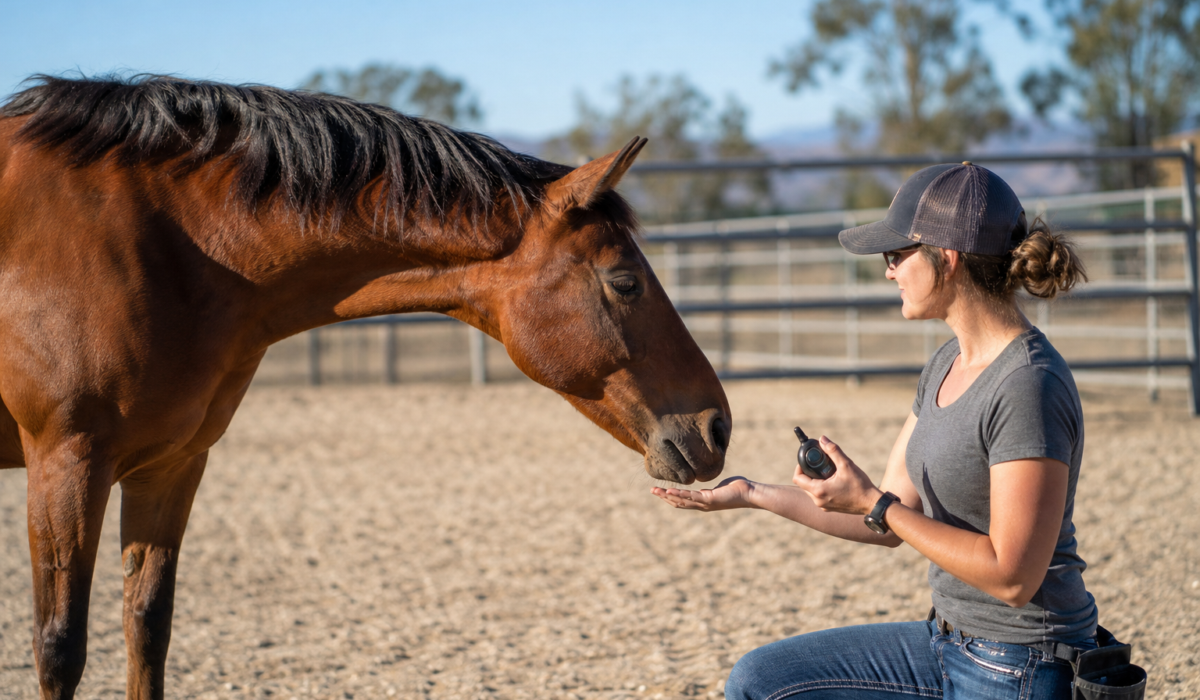
Moving beyond the fundamentals of positive reinforcement, let’s zero in on a powerful tool: clicker training. So, what exactly is it? At its core, clicker training is a precise method of communication that uses a small mechanical device to make a distinct, consistent sound – the “click.” This sound acts as a marker signal, precisely telling your horse the exact moment they performed the correct or desired behavior.
Think of it as taking a snapshot of a good movement or action. Why is this so effective in horse training? Because horses, like us, learn best when they clearly understand the cause and effect of their actions.
The click provides immediate, unambiguous feedback, cutting through any potential confusion or delay that can often hinder traditional techniques.
The beauty of clicker training, especially for advanced horse training techniques, lies in its ability to foster clear communication and accelerate learning. When trainers use the clicker, they are essentially speaking a universally understood language to their horse without relying on physical pressure or release, which, while effective in some contexts, can sometimes be misinterpreted or lead to tension. This method is all about creating strong associations – the click means “yes, that’s right!” followed by a highly valued reward, typically a treat.
This positive association builds confidence and encourages the horse to actively offer new behaviors, rather than just reacting to cues. It transforms training into a collaborative game, making the process engaging and fun for both horse and human. This approach really aligns with the philosophy we embrace here at C and C Training Stables, where we’ve seen trainers like Candee Coffee develop incredible bonds with horses over five decades of horsemanship in Ridgecrest, often through building trust and clear communication.
Essential Equipment: Beyond Just the Clicker
While the clicker itself is central, successful clicker training requires a few other key pieces of equipment. First, and perhaps most obvious, you need a good quality clicker. There are various types available – box clickers, button clickers, and even integrated clicker-target sticks.
The most important thing is that it produces a clear, consistent sound that is distinctive for your horse. We often recommend starting with a simple, easy-to-handle button clicker that fits comfortably in your hand. Next, and equally important, are high-value rewards.
These aren’t just any treats; they need to be something your horse absolutely loves and will work for. Small, easy-to-chew, and quickly consumed treats like chopped carrots, apple pieces, or specialized equine treats work wonderfully. The goal is to deliver the reward swiftly after the click, so choose something that won’t take ages for your horse to finish, otherwise the timing of the reinforcement is lost.
Beyond the clicker and treats, having a fanny pack or a treat pouch is incredibly handy. This allows you to keep your rewards easily accessible and your hands free, which is crucial for precise timing. You don’t want to be fumbling for treats while your horse is performing a perfect movement. Some trainers also find a target stick beneficial, particularly for teaching specific movements or positions without physically guiding the horse. A target stick, often a lightweight stick with a soft ball or cap on the end, can be used to guide your horse to touch a particular spot, providing a clear visual cue for them to follow, especially when introducing more complex exercises. While these tools might seem simple, their proper use is foundational to effective equine positive reinforcement. We often see new riders in Ridgecrest benefit from these straightforward preparations, helping them develop a deeper connection with their horses, much like the spring training tips emphasize establishing good habits from the start.
Building the Foundation: Charging the Clicker Effectively
Before you even begin asking your horse for specific behaviors, you must “charge” the clicker. This critical first step establishes the meaning of the click for your horse: “The click means a treat is coming!” Without this foundation, the click will just be another random sound and won’t serve its purpose as a precise marker. The process is straightforward, but requires consistency and good timing.
To start, find a quiet environment where your horse is relaxed and focused. You’ll want to have your clicker and high-value treats ready and within easy reach.
The charging process involves a series of very short, simple repetitions. You’ll click, and immediately, within one to three seconds, deliver a treat. That’s it. Repeat this sequence multiple times – click, then treat. Don’t ask your horse to do anything; just present the treat after the click. The key is for the horse to make the connection between the sound and the reward. You’re not looking for a behavior yet; you’re simply building an association. Do this for several short sessions, perhaps five to ten repetitions per session, over a few days. You’ll know the clicker is “charged” when, upon hearing the click, your horse anticipates the treat, perhaps looking towards your treat pouch or even nudging you expectantly. This becomes a powerful positive reinforcer, laying the groundwork for all future training. It’s truly about building trust and understanding, creating a positive emotional state that makes the horse a willing partner in the training process, rather than feeling forced. This systematic approach is central to all our programs, even those like youth programs, where building confidence and clear communication are paramount.
Summer Training Goals: Harnessing the Season for Development
Identifying Appropriate Summer Training Objectives
Summer, especially here in Ridgecrest, offers a unique opportunity for concentrated Horse Training and Horse Riding development. With the fundamentals of positive reinforcement and clicker training, which we discussed previously, firmly in mind, it’s time to set some strategic goals. What are you hoping to achieve with your horse this summer?
Are you aiming for more advanced liberty work techniques, or perhaps refining specific behavioral responses? A great starting point for any horse training journey is to clearly define your objectives. For instance, you might want your horse to confidently load into a trailer, stand patiently for grooming, or improve their response to subtle cues during flatwork.
When selecting your summer objectives, consider both your horse’s current skill level and their emotional state. Are they new to training, or are you working on problem-solving difficult behaviors? For newer horses, focusing on foundational exercises like targeting (touching a specific object with their nose) or developing a solid recall can be incredibly beneficial.
For more experienced equines, perhaps the goal is to introduce advanced maneuvers into manageable steps, such as perfecting a flying lead change or working on shoulder-in. Remember, the key is to break down complex behaviors into smaller, achievable steps, creating a clear pathway for progress and reducing frustration for both horse and trainer. This approach not only builds positive associations but also strengthens the bond based on trust and communication, which is crucial for any successful partnership in horse riding.
It’s also essential to consider the practicalities of summer training. Will you be focusing on groundwork mastery for a deeper connection, or will your goals be geared towards ridden work? Perhaps you’re looking to enhance trail manners or introduce your horse to new environments.
Whatever your goals, ensure they are realistic and measurable. Instead of a vague goal like “make my horse better,” aim for something specific, like “my horse will stand calmly at the mounting block for two minutes by the end of August.” Professional riders and trainers often find that specific, measurable goals are what truly drive consistent progress and help maintain mental engagement during repetitive processes. And speaking of progress, don’t forget to celebrate the small wins, as they contribute significantly to building confidence and keeping the training positive!
Leveraging Longer Days and Good Weather for Progress
The extended daylight hours and generally good weather conditions that summer brings to Ridgecrest create an ideal environment for horse training. Imagine having extra hours in the evening to work on those advanced techniques or simply enjoy a relaxed session without rushing. This additional time allows for more relaxed, focused training sessions, which can be invaluable when you’re introducing something new or working through challenging aspects.
Longer days mean you can space out sessions, offering more frequent, shorter interactions rather than cramming everything into a demanding, lengthy session. This often prevents horses from becoming overwhelmed and helps maintain their focus and positive energy.
Good weather, at least in the mornings and evenings before the full heat of the day, also opens up possibilities for outdoor training that might be limited during other seasons. You can practice leading exercises that build respect and partnership in larger areas, or engage in advanced liberty work techniques in an open field. This can be especially beneficial for horses that thrive with more space and varied scenery.
For example, practicing progressive training methods for complex behaviors in different environments can help generalize the learned behaviors, meaning your horse will respond correctly no matter where they are. This is a critical aspect of creating a truly adaptable and well-trained horse. And for those considering riding lessons, the favorable weather makes “Why March is Perfect for Starting Horse Riding Lessons” a good read, setting the stage for what summer can truly offer.
Furthermore, the pleasant summer conditions foster a more positive and relaxed atmosphere for both horse and trainer. Without the added stress of battling cold, wind, or rain, you can both focus more entirely on the task at hand. This environment is perfect for creating positive associations through consistent reinforcement.
When training becomes an enjoyable experience, horses are more likely to engage willingly and process new information more effectively. This relaxed setting often means riders and trainers can develop a deeper understanding of their horse’s subtle cues and behavioral patterns, improving overall communication. Think of it as a less pressured setting where trust can truly flourish, allowing for more natural and energetic interactions.
Many trainers find that this is when the most significant breakthroughs in behavioral training occur.
Adapting Training Schedules for Summer Conditions
While summer offers many advantages, especially in a place like Ridgecrest, it also requires thoughtful adaptation of your training schedule. The intense heat, particularly during peak afternoon hours, can quickly lead to exhaustion and reduce a horse’s willingness to learn. You wouldn’t want to push your horse to perform complex exercises when their physical comfort is compromised.
Therefore, scheduling your training sessions during the cooler parts of the day – early mornings or late evenings – is paramount. This not only ensures your horse’s physical well-being but also optimizes their mental capacity for learning. A horse that is fighting discomfort from the heat will not be able to focus on understanding pressure and release timing for maximum effect or even simple clicker training cues.
Hydration is another critical factor. Always ensure fresh water is readily available, and consider offering electrolytes, especially after strenuous sessions. Shortening the duration of your training sessions while maintaining their frequency can also be a wise strategy.
Instead of one long, intense session, try two shorter, focused sessions. This can help prevent fatigue and keep your horse engaged and enthusiastic about the training process. This consistent yet manageable approach builds confidence and progress without overtaxing their system.
For example, instead of a 45-minute ridden session in the heat, you might do a 20-minute groundwork session early morning and another 20 minutes of light riding or liberty work in the cooler evening.
Lastly, pay close attention to your horse’s individual needs. Some horses handle heat better than others. Learning to read your horse’s body language and emotional state becomes even more critical in summer. Signs of overheating, like rapid breathing, sweating excessively, or lethargy, mean it’s time to stop and cool down. Adapting your approach requires understanding these subtle changes and prioritizing your horse’s comfort and health above all else. This process builds trust and understanding, creating a positive foundation for all future training. And remember, the goal is always to create a positive experience, fostering a loving partnership rather than simply completing tasks. This is a large part of the philosophy embraced by C and C Training Stables in Ridgecrest, ensuring all horses and riders experience successful and enjoyable horse training methods, even in the summer heat.
Implementing Clicker Training for Specific Summer Skills
Teaching Groundwork Manners and Leading
Summer provides an excellent opportunity to refine groundwork manners and leading skills using horse clicker training and equine positive reinforcement. Think about it: longer days mean more consistent training sessions without battling the elements. We’re talking about foundational behaviors here, like standing quietly, moving away from pressure, and politely leading.
Instead of relying solely on physical cues, which can often be misconstrued or create resistance, clicker training introduces a clear communication channel. For instance, when asking your horse to step back, instead of heavy pressure on the lead rope, apply a light, consistent pressure. The moment they shift their weight or take even a small step back, you click and reward.
This positive association builds rapidly, making the horse eager to offer the desired behavioral movement. You’re not just getting compliance; you’re creating a horse that actively participates.
For leading, focus on teaching your horse to walk beside you at a consistent pace, maintaining a soft connection on the lead. Many trainers might resort to pulling or jerking if a horse lags or rushes, but with positive reinforcement strategies, you can prevent these issues. Start in a quiet area, perhaps one of the round pens at C and C Training Stables in Ridgecrest.
As your horse walks calmly beside you, click and reward frequently. If they get ahead, gently slow yourself and ask them to match your pace; once they do, click and reward. If they lag, give a gentle nudge or a verbal cue, clicking the instant they move forward with you.
This process builds a solid understanding of what “leading politely” means, transforming what can be a constant struggle into a cooperative dance. It really helps to foster a sense of trust and partnership before you even saddle up, which is crucial for any advanced training.
Improving Trailer Loading and Vet Preparedness
Trailer loading is often cited as one of the most challenging behaviors to teach, and understandably so. It requires horses to overcome natural instincts of claustrophobia and fear of enclosed spaces. Equine positive reinforcement, specifically with clicker training, can dramatically improve this experience, making it less stressful for both horse and trainer.
The key is to break down the complex task of loading into tiny, achievable steps. Start by simply approaching the trailer. Click and reward any curiosity or willingness to even look at the trailer.
Then, focus on touching the trailer with their nose, then a single hoof on the ramp, then two hooves, and so on. Each tiny progress, every subtle change in their comfort level, gets a click and a reward.
This method drastically reduces the pressure often associated with trailer loading. Instead of forcing a horse in, you’re inviting them to explore a safe space. This same step-by-step approach applies to vet preparedness.
Think about tasks like standing for injections, allowing hoof cleaning, or wearing a blanket. Each of these can be introduced through small, positive interactions. For instance, holding a hand near a sensitive area without touching, then briefly touching, then applying slight pressure.
Every acceptance, no matter how small, is immediately reinforced with a click and a treat. This creates a positive conditioned emotional response to procedures that might otherwise provoke fear or resistance, leading to a much calmer and more cooperative horse during essential care. We’ve seen firsthand how this approach can transform anxious horses into eager participants, which is a testament to the power of consistent positive reinforcement.
Enhancing Riding Performance and New Maneuvers
When it comes to enhancing riding performance and introducing new, advanced maneuvers, horse clicker training moves beyond basic obedience and into refining precision and willingness. Once your horse understands the concept of the click as a “you got it right!” signal, you can apply it to subtle cues during flatwork or even jumping. For example, if you’re working on a more collected trot, the instant your horse offers that slight engagement of the hindquarters or rounds their back slightly, a well-timed click reinforces that specific movement. This level of precise feedback is difficult to achieve with traditional rein or leg aids alone, which often communicate broader actions.
For introducing new maneuvers, such as a shoulder-in or a flying lead change, clicker training allows you to break down these complex behaviors into easier, manageable chunks. Think about teaching a shoulder-in: you might click and reward simply for the horse yielding their shoulder slightly, then for stepping under, and eventually for the full execution of the movement with the correct bend. This progressive training builds confidence, especially in younger or less experienced horses who might otherwise get overwhelmed.
The click allows you to pinpoint the exact moment of success, reinforcing the desired physical and mental engagement. It takes the guesswork out for the horse and for the rider, strengthening the communication between them. This approach also helps trainers and riders in Ridgecrest to develop a deeper understanding of their horse’s progress and capabilities, fostering a truly harmonious partnership, as we’ve championed at C and C Training Stables for decades, carrying on the legacy seen in “Candee Coffee: Five Decades of Horsemanship in Ridgecrest.”
Troubleshooting and Advancing Your Positive Reinforcement Journey
Common Challenges and How to Overcome Them
Even with the best intentions and a solid understanding of positive reinforcement strategies, you’re bound to hit a few bumps in the road. It’s part of the process, and trainers in Ridgecrest understand this. One common challenge riders face is inconsistent timing with the clicker.
If your click isn’t perfectly synchronized with the desired behavior, your horse might not make the connection. For instance, if your horse offers a beautiful, soft bend in the arena but you click a second too late, after they’ve already straightened, you’re reinforcing the straightening, not the bend. The solution?
Practice! Many trainers use a dummy clicker or even just a pen to practice their timing, aiming for that precise moment the behavior occurs.
Another hurdle can be your horse losing motivation or becoming “sour” to the treats. This often happens if the rewards aren’t high-value enough, or if the training sessions are too long and monotonous. Horses, like people, need variety and genuine incentives.
Try rotating different types of treats – some horses love carrots, others go wild for apple chunks or even special horse cookies. Keep sessions short and sweet, ending on a high note before your horse gets bored or frustrated. And remember, sometimes the best reward isn’t a food item at all, but a scratch in just the right spot or a moment of release from pressure, especially if you’re building towards more advanced techniques.
Finally, sometimes horses just don’t “get” it, despite your best efforts. This rarely means your horse isn’t smart enough; it usually points to a breakdown in communication on our end. Perhaps the steps are too large, or the cues aren’t clear. Breaking down complex behaviors into smaller, more manageable exercises is key. If you’re working on something intricate, like a specific movement in getting your horse, go back to basics. Simplify, simplify, simplify. Don’t be afraid to revisit foundational exercises. This patient, methodical approach builds confidence and progress, ensuring both you and your horse remain engaged and positive.
Fading the Clicker and Generalizing Behaviors
Once your horse consistently offers a behavior in response to a specific cue, the next logical step is to start fading the clicker. This doesn’t mean stopping positive reinforcement altogether, but rather transitioning from the click as the primary marker to a release of pressure, a verbal cue, or eventually, the intrinsic reward of performing the behavior itself. Think of the clicker as training wheels.
You use them to build confidence and muscle memory, but eventually, you take them off so the rider can balance independently. When your horse understands tasks like picking up their feet when you tap their leg, you can begin to click for sequences of correct responses, rather than every single one. Slowly, the click becomes less frequent, replaced by other forms of reinforcement.
Generalizing behaviors is another critical component. A horse might perform a behavior perfectly in the familiar environment of your Ridgecrest riding arena, but completely forget it when asked to do the same thing out on a trail or in a busy show environment. To generalize, practice the behavior in various settings: different areas of the barn, outside, with other horses present, and even with different people asking for the behavior.
Start with minimal distractions and gradually increase the complexity of the environment. For example, if your horse loads well into a trailer when alone, try it with another horse tied nearby, then with the radio playing, then at a new location. Each successful repetition, even a small step, should be reinforced.
This approach helps the horse understand that the cue means the same thing, no matter the context, building a truly reliable and versatile equine partner.
Integrating Positive Reinforcement into Daily Horse Management
Positive reinforcement isn’t just for structured training sessions; it’s a philosophy that can fundamentally change your entire relationship with your horse. Integrating a positive approach into daily horse management transforms routine tasks from potential struggles into cooperative interactions. Think about simple things like grooming.
Does your horse tolerate brushing, or do they actively enjoy it? By pairing grooming with positive reinforcement – a scratch in a favorite spot, a verbal “good boy,” or even a small treat after a particularly good stand – you can turn a mundane task into a bonding experience. Similarly, catching your horse in the pasture can become a game rather than a chore; approach them, offer a treat, and eventually, they’ll be coming to you.
Even handling vet visits or farrier appointments can benefit immensely. Desensitizing your horse to new tools or procedures with positive associations can significantly reduce stress for everyone involved. For example, before the farrier arrives, spend time gently touching your horse’s legs and feet, providing a small reward for their calmness.
Over time, this proactive approach creates a horse that is not just compliant, but genuinely comfortable and trusting in various situations. It reinforces the idea that interacting with humans, even in potentially uncomfortable scenarios, can lead to positive outcomes. This continuous, subtle application of positive reinforcement builds a deeper level of trust and communication, making every interaction with your horse a positive one, and ultimately fostering a happier, more willing partner in the long run.
If you are ever in doubt as to how to begin, remember that seasoned professionals, like those who have shaped the lasting legacy in Ridgecrest, are always available for guidance.
Embarking on a horse clicker training journey, or simply incorporating more equine positive reinforcement into your routine, is a rewarding endeavor that deepens the bond between horse and rider. While challenges will undoubtedly arise, understanding common pitfalls and having strategies to overcome them, along with a clear plan for fading the clicker and integrating these methods into daily life, will empower you to build a confident, cooperative, and joyful partnership. At C and C Training Stables in Ridgecrest, we believe in the power of patience, consistency, and kindness to unlock your horse’s full potential.
Ready to take your training to the next level this summer and beyond? We invite you to reach out to us and explore how our expert trainers can support your goals, offering personalized guidance and advanced horse training techniques that will set you and your horse up for a lifetime of successful and harmonious experiences.
Related Posts
- Candee Coffee: Five Decades of Horsemanship in Ridgecrest
- More Than Riding Lessons: C and C Training Stables as a Community Oasis
- Riding Into Inclusivity: Youth Programs and Therapeutic Horsemanship at C and C Training Stables
- Behind the Barn Doors: A Day in the Life at C and C Training Stables
- The Lasting Legacy of C and C Training Stables in Ridgecrest
- Getting Your Horse Ready for Spring Riding Season in Ridgecrest
- Spring Training Tips That Actually Work for New Riders
- Why March is Perfect for Starting Horse Riding Lessons