Leading Exercises That Build Respect and Partnership
Foundation Training: Establishing Clear Communication
Every successful partnership begins with mutual understanding, and the relationship between horse and rider is no exception. When you establish clear communication from the ground up, you create a foundation that transforms every interaction into an opportunity for deeper connection. The horses at c and c demonstrate daily how proper foundation training creates confident, willing partners who respond with enthusiasm rather than compliance.
The difference between a horse that merely obeys and one that genuinely partners with you lies in how you establish your initial communication patterns. This foundation work isn’t about dominance – it’s about creating a language both you and your horse understand completely.
Ground Rules and Personal Space Boundaries
Personal space boundaries create safety and respect in every interaction. Your horse needs to understand where they can be and where they cannot, not through intimidation but through consistent, fair expectations. Think of it as teaching good manners – something that benefits both parties.
Start by defining a clear bubble around yourself, roughly an arm’s length in all directions. Your horse should move away from light pressure applied to their chest or shoulder, maintaining this respectful distance unless invited closer. Practice this during daily interactions like grooming and feeding. When your horse crowds into your space, use gentle but persistent pressure to ask them to step back.
The key is consistency. Every time you interact with your horse, maintain the same boundaries. If you allow crowding during treats but correct it during training, you create confusion that undermines your communication system.
Reading Your Horse’s Body Language
Horses communicate constantly through subtle shifts in posture, ear position, and energy. Learning to read these signals transforms your training from guesswork into genuine conversation. A horse’s ears tell you where their attention is focused, while their body tension reveals their emotional state.
Watch for the soft eye that indicates relaxation versus the hard stare that suggests tension or concern. Notice how your horse’s breathing changes during different exercises. Rapid, shallow breathing often signals stress, while deep, slow breaths indicate a calm, thinking horse.
Physical changes happen before behavioral ones. Your horse might shift their weight away from you before actually moving, or their muscles might tense slightly before they brace against pressure. These early warning signs allow you to adjust your approach before resistance builds.
In Ridgecrest’s dusty arena conditions, you learn to read these subtle cues quickly. The experienced trainers here recognize that successful daily interactions depend on this constant communication flow between horse and handler.
Consistent Voice Commands and Hand Signals
Your voice carries more information than just words – tone, timing, and energy levels all communicate meaning to your horse. Develop a consistent vocabulary of simple commands: “walk on,” “whoa,” “back,” and “over.” Each command should have the same tone and inflection every time you use it.
Hand signals provide visual cues that support your voice commands. A raised palm means stop, while pointing indicates direction. These signals become especially valuable when working at distance or in noisy environments where voice commands might not be heard clearly.
Practice your commands during calm moments so they’re established before you need them in challenging situations. Your horse should respond to a quiet “whoa” just as readily as a firm one. This consistency builds confidence because your horse knows exactly what each cue means.
Building Trust Through Predictable Routine
Horses find comfort in routine, and this predictability becomes the foundation for trust-building. Establish consistent patterns for approaching, haltering, grooming, and handling. Your horse should know what to expect from each interaction.
Begin each session the same way – perhaps with a specific greeting routine or grooming sequence. This mental preparation helps your horse transition into working mode gradually rather than being surprised by sudden demands.
Routine doesn’t mean boring. Within your consistent framework, you can introduce variety and new challenges. But the underlying pattern – how you approach, how you communicate, how you end sessions – remains steady.
When challenges arise, this foundation of predictable routine gives both you and your horse something familiar to return to. Rather than fighting through confusion, you can reset to basics and rebuild from solid ground.
Ground-Based Exercises for Mutual Understanding
Leading from Behind: Following Your Horse’s Movement
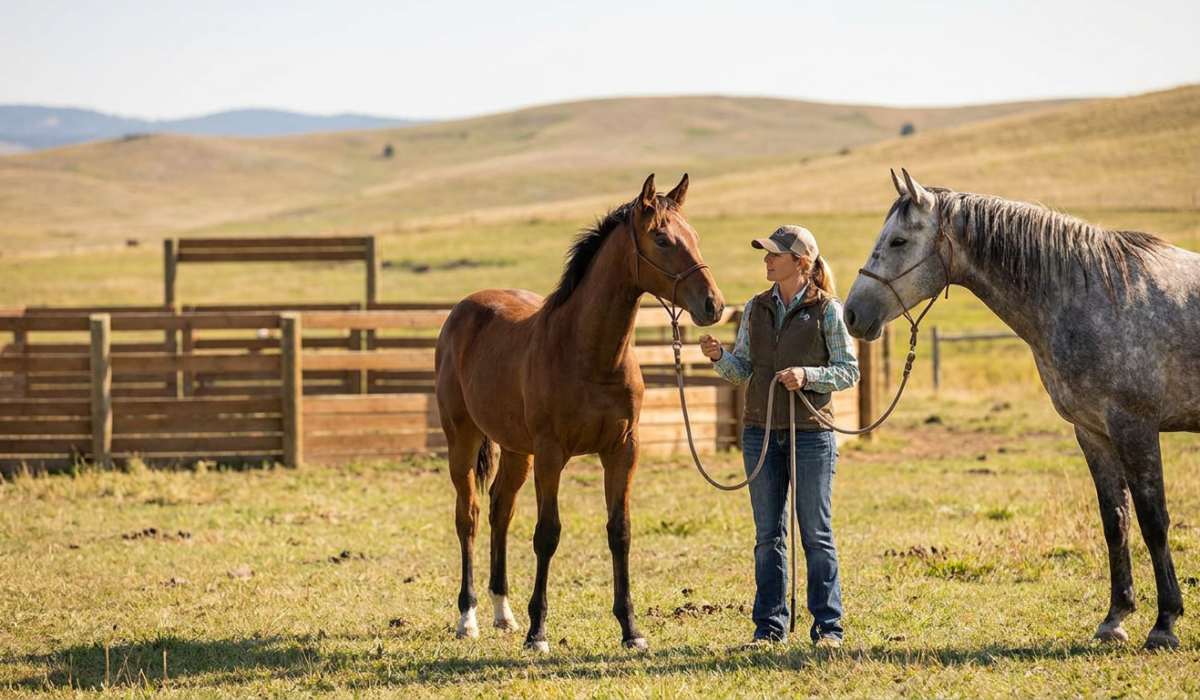
The concept of leading from behind challenges traditional thinking about control and dominance in horse training. Rather than pulling your horse forward, this technique involves positioning yourself slightly behind the horse’s shoulder and encouraging movement through energy and intention. The approach creates a partnership dynamic where the horse chooses to move forward while maintaining awareness of your presence.
Start by establishing your position at the horse’s left shoulder, holding the lead rope with gentle contact. Instead of pulling, use your body language to suggest direction. Step forward with purpose, allowing your energy to communicate the desired movement. Many horses respond immediately to this subtle approach, moving forward without feeling pressured or trapped.
This technique becomes particularly valuable when working with horses that have developed resistance to traditional leading methods. Horses that pull back or refuse to move often do so because they feel confined or forced. By positioning yourself behind their movement, you create psychological space that allows them to participate willingly in the exercise.
Yield to Pressure Training Techniques
Teaching your horse to yield to pressure forms the foundation of respectful communication. This fundamental skill translates directly to riding, where your horse must respond to leg pressure, rein contact, and seat position. Ground-based pressure training allows you to establish these responses without the complexity of being mounted.
Begin with lateral flexion exercises using gentle finger pressure on the horse’s neck. Apply light pressure and wait for any movement away from the pressure, even the slightest shift. The moment your horse yields, immediately release the pressure and praise them. This timing teaches the horse that yielding to pressure brings relief and positive feedback.
Progress to asking for hindquarter movement by applying pressure behind the horse’s rib cage. The goal isn’t to push the horse around, but rather to create a conversation where light pressure communicates your request. Horses naturally understand pressure dynamics in their herd interactions, so this approach aligns with their instinctual communication patterns.
Advanced pressure exercises include asking the horse to step backward from chest pressure and move the shoulders laterally from neck pressure. Each exercise builds upon previous learning, creating a comprehensive system of communication that transfers seamlessly to under-saddle work.
Mirror Work: Synchronized Movement Patterns
Mirror work develops the subtle communication that creates true partnership between horse and handler. This exercise involves moving together in patterns where the horse mirrors your movements without physical cues from the lead rope. The technique requires patience and consistency, but builds incredible trust and attuniveness.
Start in a round pen or enclosed area where safety isn’t compromised. Begin walking forward while your horse walks beside you on a loose lead. Change direction and pace gradually, using only your body language to communicate changes. Many trainers in therapeutic horsemanship programs use this technique to develop emotional connection between horses and participants.
The exercise challenges both horse and handler to maintain awareness of each other’s energy and intention. When done correctly, the horse anticipates your movements and adjusts accordingly, creating a flowing dance of synchronized motion. This level of connection translates to improved responsiveness under saddle and deeper mutual trust.
Liberty Training Fundamentals
Liberty work represents the ultimate expression of partnership, where the horse chooses to work with you without physical restraint. This advanced training builds upon all previous exercises, requiring solid foundation in pressure response and communication before attempting work without a lead rope.
Begin liberty training in a small, safe enclosure where the horse can’t leave the area entirely. Start with simple exercises the horse knows well, such as walking beside you or stopping on command. Use your body position and energy to communicate rather than relying on physical cues.
The key to successful liberty work lies in making the right thing easy and the wrong thing difficult. If your horse chooses to walk away, don’t chase them. Instead, use pressure to make standing apart uncomfortable while making working with you comfortable and rewarding. This approach requires patience and consistent timing, but creates genuine partnership.
Liberty exercises progress from simple leading to complex movements like changing gaits, direction changes, and even basic maneuvers. The horse’s willingness to participate becomes a barometer of your relationship quality. When horses choose to work with you freely, it indicates genuine respect and partnership rather than mere compliance through constraint.
Mounted Exercises That Develop True Connection
Breath Synchronization and Seat Communication
The foundation of mounted partnership begins with something most riders never consciously think about: breathing together. When you mount your horse, your breathing patterns directly influence their nervous system through subtle changes in your seat and muscle tension. Professional trainers recognize that horses naturally sync their respiratory rhythm with their rider’s when trust is present.
Start by establishing conscious breath control at the halt. Take three deep, slow breaths while maintaining a soft, following seat. Most horses will lower their head within thirty seconds as their parasympathetic nervous system engages. This creates the mental state necessary for deeper communication rather than simple obedience.
Your seat becomes a communication tool when paired with intentional breathing. A tense rider holding their breath creates a horse that braces against movement. But when you breathe into your lower ribs and allow your pelvis to follow the horse’s motion, you’re establishing the physical dialogue that builds genuine partnership.
Progressive Rein Contact Building
Contact isn’t about control through the reins but rather creating a telephone line of communication between your hands and your horse’s mouth. The key lies in progressive development that honors your horse’s natural learning patterns while building consistent communication.
Begin with passive contact at the walk. Hold the reins with the weight of your arms alone, allowing your horse to seek the connection rather than imposing it. This approach develops horses that stay soft through the poll and jaw instead of fighting against restrictive hands.
Progress by asking for subtle directional changes through your seat first, then supporting with gentle rein aids. Your horse learns that pressure from the bit means “listen to my seat and legs” rather than “stop moving forward.” This creates horses that remain energetic and willing while maintaining contact.
Advanced partnership develops when horses begin offering collection through self-carriage. They understand that maintaining light contact with your hands creates a comfortable conversation rather than a constant battle. This process typically takes three to six months of consistent work but creates lasting behavioral changes.
Lateral Flexion and Collection Work
Lateral flexion exercises serve multiple purposes beyond simple suppleness training. They establish your ability to direct your horse’s attention and energy while building the physical strength necessary for advanced movement. More importantly, they teach horses to yield mentally as well as physically.
Start with basic lateral flexion at the halt, asking your horse to bend their neck to each side until their nose touches your toe. Hold the position for three seconds, then release completely. This exercise builds neural pathways that connect yielding to pressure with immediate relief rather than sustained discomfort.
Progress to moving lateral work through leg yields and shoulder-in movements. These exercises require your horse to coordinate their body while maintaining forward energy, creating mental engagement that prevents boredom and resistance. The complexity keeps their attention focused on you as their partner rather than external distractions.
Collection develops naturally when horses understand that gathering their bodies creates easier movement rather than restricted motion. This understanding only emerges through patient progression that allows horses to discover the physical benefits of self-carriage.
Trail Riding Challenges for Partnership
The arena provides controlled learning, but real partnership develops when facing unexpected challenges together. Trail riding in Ridgecrest’s diverse terrain offers natural obstacles that test and strengthen your communication system under varying conditions.
Create specific challenges during trail rides by approaching new objects or terrain features calmly. Let your horse examine unfamiliar obstacles while maintaining supportive contact through your seat and legs. This builds confidence in your leadership without creating fearful obedience.
Use trail riding to practice practical exercises, such as asking for collection while navigating uneven ground or maintaining rhythm changes on hills. These challenges create horses that trust your guidance in uncertain situations.
Working Through Resistance Together
Resistance often indicates confusion or physical discomfort rather than deliberate disobedience. Professional approaches focus on identifying the root cause while maintaining positive forward movement rather than escalating pressure.
When horses resist specific movements, break the exercise into smaller components. For example, if your horse braces against lateral work, return to simple flexion exercises until they soften through their poll and jaw. This systematic approach builds success rather than creating training battles.
Timing becomes critical when working through resistance. The moment your horse offers any softening or willingness, immediately reward with release of pressure and verbal praise. This creates horses that actively seek correct responses rather than simply avoiding discomfort.
Partnership emerges when both horse and rider learn to work through challenges together, creating mutual trust that extends far beyond the arena.
Problem-Solving Through Collaborative Training
Addressing Fear-Based Behaviors
Fear-based reactions in horses often stem from past experiences or lack of trust in their handler’s leadership. When a horse consistently shies, bolts, or freezes during leading exercises, the solution isn’t forcing compliance but rather building confidence through predictable, positive experiences.
The key lies in recognizing the difference between respect issues and genuine fear responses. A fearful horse will show tension through body language—raised head, rapid breathing, or wide eyes—while a disrespectful horse typically displays pushiness or testing behaviors without the accompanying stress signals.
Start by creating safe spaces where the horse can succeed. Use approach-and-retreat techniques during leading work, allowing the horse to process new stimuli at their own pace. When introducing potentially scary objects or environments around horse riding facilities, maintain calm energy and give the horse permission to investigate rather than demanding immediate acceptance.
Progressive desensitization works particularly well when combined with consistent leadership. Rather than avoiding triggers, gradually expose horses to them while maintaining clear boundaries and providing reassurance through steady, confident handling.
Converting Dominance Issues into Leadership Opportunities
True dominance behaviors in horses are rare, but pushy or challenging behaviors during leading exercises often get mislabeled as dominance. What appears as disrespect usually indicates confusion about boundaries or inconsistent handling from previous training experiences.
Effective leadership conversion begins with establishing clear, consistent rules during every interaction. If a horse crowds your space during leading, immediately create distance using steady pressure rather than punishment. The timing becomes crucial—correction must happen the moment the boundary gets crossed, not after the behavior escalates.
Body language plays a significant role in establishing leadership without creating adversarial relationships. Horses naturally respond to confident, purposeful movement. Walk with intention, maintain appropriate personal space, and use subtle positioning to guide rather than pull or drag your horse forward.
Advanced trainers often incorporate backing exercises and directional changes to reinforce respectful following. These movements require the horse to pay attention and respond promptly, creating mental engagement that prevents pushy behaviors from developing during routine leading work.
Building Confidence in Anxious Horses
Anxious horses require patient, systematic approaches that build trust incrementally. These horses often benefit from longer warm-up periods and more frequent positive reinforcement during leading exercises. Understanding their triggers helps create training sessions that gradually expand their comfort zones.
Consistent routine becomes essential for anxious horses. Following the same sequence during leading exercises—haltering, positioning, and movement patterns—provides predictability that reduces stress. Even small changes in environment or handler energy can trigger setbacks, so maintaining emotional consistency matters as much as technical skill.
Ground work exercises that emphasize partnership rather than submission work particularly well with nervous horses. Simple activities like synchronized walking, halt transitions, and gentle direction changes allow horses to succeed while building confidence in their handler’s reliability.
Many anxious horses respond well to choice-based training approaches. Instead of forcing movement, offer options and reward correct choices. This approach helps horses feel more in control of their situation, which naturally reduces anxiety and creates willing partnership rather than fearful compliance.
Creating Win-Win Solutions for Training Obstacles
Effective problem-solving in horse training requires flexibility and creativity. When standard leading techniques aren’t working, successful trainers step back and analyze the situation from the horse’s perspective. What environmental factors might be contributing? Are the handler’s expectations realistic for this horse’s current skill level?
Breaking down complex problems into smaller, manageable components often reveals solutions. A horse that refuses to lead past certain areas might need gradual exposure combined with positive associations. Seasonal training adjustments can also address outdoor leading challenges that develop during different weather conditions.
Collaborative training approaches acknowledge that both horse and handler contribute to solutions. Instead of viewing resistance as defiance, consider it communication about comfort levels or understanding. Adjust techniques based on individual horse responses rather than forcing predetermined methods.
Creating win-win scenarios often involves changing the training environment or approach entirely. Moving to quieter areas, adjusting timing, or incorporating different motivational strategies can transform challenging situations into productive learning opportunities that strengthen the partnership rather than creating ongoing conflicts.
Advanced Partnership Development Techniques
Energy Matching and Emotional Regulation
The most sophisticated partnership techniques require trainers to become mirrors of their horses’ emotional states while simultaneously guiding them toward calmer energy levels. This advanced skill goes beyond basic ground work and enters the realm of energetic communication that professional trainers spend years perfecting.
When your horse arrives at the arena with high energy or anxiety, matching that energy initially (rather than immediately trying to calm them) creates an instant connection. You might walk briskly alongside a tense horse for several minutes, allowing your breathing to sync with theirs. The key lies in gradually reducing your energy while maintaining that synchronized connection, essentially leading your horse into a more relaxed state through subtle changes in your own body language.
Successful energy matching requires consistent practice and acute awareness of your own emotional state. Many trainers in Ridgecrest have discovered that horses respond better to authentic emotional regulation than forced calmness. When you genuinely shift your energy from alert to peaceful, horses naturally follow that transition rather than resisting an artificial attempt at control.
Teaching Your Horse to Seek Connection
Building a horse that actively seeks partnership transforms the entire training relationship from compliance-based to connection-based. This approach creates horses that engage mentally and emotionally, becoming true partners rather than simply obedient animals.
The foundation begins with making yourself the most interesting element in your horse’s environment. This doesn’t mean constant treats or overwhelming energy, but rather becoming a source of positive experiences and mental stimulation. When working with horse riding programs, trainers often use intermittent reinforcement schedules where connection itself becomes rewarding.
Advanced practitioners develop exercises where horses choose to maintain proximity and attention without physical restraint. You might work in a round pen where the horse is free to move away, but through consistent positive associations, they learn that staying connected brings better experiences than disconnection. This becomes particularly powerful when horses begin approaching you rather than waiting to be approached.
Creating micro-moments of choice throughout each session builds this seeking behavior. Allow your horse to decide when to engage with each exercise, rewarding the decision to participate with immediate release of pressure and genuine appreciation. Over time, horses develop confidence in making these choices and actively seek opportunities for partnership.
Developing Intuitive Communication Skills
Intuitive communication represents the pinnacle of horse-human partnership, where subtle cues replace obvious commands and horses respond to intention rather than just physical pressure. This level of communication requires both technical precision and emotional awareness that many riders find challenging to develop.
The process begins with refining your own body awareness until every gesture becomes intentional. Professional trainers often practice movement exercises without horses, learning to control their energy projection and spatial presence. When you can consciously adjust the intensity of your focus or the direction of your intention, horses begin responding to these subtle changes long before physical cues become necessary.
Timing becomes critical at this level. You must recognize the exact moment when your horse’s attention shifts or their body begins preparing for movement. This requires developing peripheral vision and feeling for changes in energy rather than relying solely on obvious physical signals. Many successful partnerships develop when trainers learn to sense their horse’s thoughts before they manifest as behaviors.
Advanced communication also involves learning your horse’s individual language patterns. Some horses respond better to steady, consistent energy while others prefer dynamic changes in intensity. Understanding these preferences allows you to tailor your communication style, creating deeper connection and more responsive partnership.
Competition Preparation Through Trust Building
Competition environments test the depth of partnership more than any other situation, making trust-based preparation essential for consistent performance. Unlike traditional training that focuses primarily on physical skills, partnership-based preparation develops emotional resilience and mental flexibility that perform under pressure.
The specialized training programs recognize that competition success depends heavily on maintaining connection despite environmental distractions and performance pressure. This requires gradually introducing challenging elements while preserving the horse’s confidence and willingness to engage.
Building competition readiness through trust involves creating positive associations with pressure rather than simply drilling movements until they become automatic. Horses learn that increased intensity from their rider means exciting opportunities rather than stressful demands. This mental framework allows them to maintain partnership even when performance requirements intensify.
Advanced preparation includes exercises that simulate competition pressures while maintaining the supportive partnership dynamic. Horses that compete successfully from this foundation show remarkable consistency because their focus remains on their partnership with their rider rather than external pressures or distractions.
Maintaining Long-Term Respect and Partnership
Daily Practices for Sustained Connection
Building lasting partnership requires consistent daily practices that reinforce mutual respect without becoming routine chores. Start each session with a simple greeting ritual where you allow your horse to acknowledge your presence before moving into work. This creates a positive association rather than pressure from the moment you approach.
Consistency in your energy and expectations becomes the foundation of trust. Your horse reads subtle changes in your body language and breathing patterns, so maintaining calm confidence during everyday interactions helps establish reliable communication. Even mundane activities like grooming or leading to pasture offer opportunities to practice the partnership principles you’ve developed through formal training programs.
The key lies in maintaining the same clear boundaries and respectful communication during routine care as you would during advanced exercises. Your horse learns that partnership isn’t just for training sessions but extends to every interaction throughout the day.
Recognizing and Addressing Partnership Breakdowns
Even strong partnerships experience moments of disconnect, and recognizing these early prevents bigger issues from developing. Watch for subtle signs like delayed responses to familiar cues, increased tension during usually comfortable exercises, or changes in your horse’s approach to you in the pasture.
Partnership breakdowns often stem from rushing progress or inconsistent pressure application rather than major training errors. When you notice resistance building, step back to simpler exercises where both you and your horse feel successful. This rebuilds confidence without creating additional stress or confrontation.
Physical discomfort can also manifest as partnership issues, so consider whether equipment changes, environmental factors, or health concerns might be affecting your horse’s willingness to engage. Sometimes what appears to be disrespect is actually your horse communicating that something doesn’t feel right.
Address breakdowns by returning to foundational exercises that originally built your connection. Ground work often reveals communication gaps that mounted work might mask, allowing you to identify and resolve specific areas of confusion.
Seasonal Training Adjustations and Adaptations
Seasonal changes in Ridgecrest create unique opportunities to strengthen partnership through varied experiences and environmental challenges. Spring energy requires channeling increased excitement into productive training sessions, while summer heat demands shorter, more focused work periods that respect both physical and mental limitations.
Winter weather patterns often mean more arena time and less variety, which can test your partnership’s resilience during repetitive exercises. Use these periods to refine subtle communication and develop deeper connection through detailed work rather than relying on external stimulation to maintain engagement.
Seasonal adaptations also apply to your horse’s changing nutritional and exercise needs throughout the year. A true partnership acknowledges these natural cycles and adjusts training intensity and expectations accordingly, rather than maintaining rigid schedules that ignore your horse’s seasonal requirements.
Building a Legacy of Trust with Multiple Horses
Working with multiple horses teaches you to adapt your partnership approach while maintaining core principles of respect and clear communication. Each horse brings different emotional needs and learning styles, requiring you to develop flexibility within consistent boundaries.
Advanced horsemen understand that partnership skills transfer between horses but require individual calibration. The timing that works perfectly with one horse might be too fast or too slow for another, yet the underlying principles of pressure, release, and positive association remain constant across all relationships.
Building a legacy means creating horses that trust humans generally, not just you specifically. This requires teaching horses to respond to clear, consistent communication rather than personal habits or shortcuts that only work with familiar handlers.
The ultimate measure of successful partnership training is watching your horses interact confidently with other qualified handlers while maintaining the respect and willing cooperation you’ve developed together. This demonstrates that you’ve built genuine understanding rather than dependency, creating horses that enrich the broader equestrian community through their positive training experiences.
Whether you’re working with your first horse or developing skills across multiple partnerships, remember that horse riding offers ongoing opportunities to refine these essential relationship-building techniques. True partnership develops over years of consistent, respectful interaction, creating bonds that enhance both horse and human for a lifetime of meaningful connection.