Summer Horse Training Programs That Build Confidence in Young Riders
Understanding the Psychology of Young Riders
The moment a young rider first approaches a horse, their mind processes a thousand calculations. Will this massive animal hurt me? Can I control something so powerful? These questions flash through developing minds faster than we can address them, creating the foundation for either lifelong confidence or persistent anxiety in the saddle.
Understanding how young riders think and feel isn’t just helpful for instructors—it’s absolutely essential for creating programs that actually work. The psychology behind childhood development intersects with equine interaction in ways that can either accelerate learning or create lasting barriers.
How Fear and Anxiety Develop in Beginning Riders
Fear in young riders rarely starts with the horse itself. Most anxiety begins before they even enter the arena, triggered by stories they’ve heard, movies they’ve watched, or simply the overwhelming size difference between a 60-pound child and a 1,200-pound animal.
The amygdala (the brain’s alarm system) doesn’t distinguish between real and perceived threats. When a seven-year-old hears a horse snort or feels the ground vibrate under hoofbeats, their nervous system might interpret these as danger signals. This creates a cascade of stress hormones that actually make learning more difficult.
What’s particularly challenging is that children often can’t articulate their fears clearly. They might say they’re “scared of getting hurt,” but the real fear could be losing control, disappointing their parents, or feeling embarrassed in front of other riders. These underlying anxieties require different approaches than simple safety reassurances.
Physical symptoms manifest quickly too. Tense shoulders, shallow breathing, and rigid posture all communicate anxiety to the horse, who responds by becoming more alert or nervous themselves. This creates a feedback loop where the child’s fear increases the horse’s tension, which validates the child’s initial anxiety.
Building Trust Between Horse and Rider from Day One
Trust doesn’t happen in a single moment—it builds through hundreds of small, positive interactions. The most effective approach starts on the ground, not in the saddle. Young riders need to understand horses as individuals with personalities, preferences, and predictable behaviors.
Grooming sessions create particularly powerful bonding opportunities. When a child brushes a horse’s neck and feels the animal lean into the touch, they experience firsthand that horses can enjoy human interaction. This simple revelation shifts the dynamic from “me versus this scary animal” to “me and my horse partner.”
Consistency matters more than intensity in these early relationships. A quiet, reliable horse who responds predictably to basic cues helps young riders develop confidence in their own abilities. The therapeutic horsemanship programs that work best pair children with horses whose temperaments match their emotional needs.
Teaching young riders to read basic horse body language empowers them with knowledge that reduces uncertainty. When they can recognize relaxed ears, soft eyes, and lowered heads, they gain tools for assessing their horse’s emotional state throughout each session.
Age-Appropriate Training Approaches for Different Developmental Stages
Six-year-olds process information completely differently than twelve-year-olds, and effective programs adapt accordingly. Younger children (ages 5-8) learn best through play-based activities that don’t feel like formal instruction. Games involving leading horses through obstacle courses or practicing mounting from progressively higher blocks keep them engaged without overwhelming their attention spans.
Middle childhood (ages 9-11) brings increased ability to understand cause and effect. These riders can grasp concepts like “gentle hands create soft mouths” and begin working on basic riding position without constant correction. Their developing coordination allows for more complex tasks, but they still need frequent positive reinforcement.
Adolescents (12+) often arrive with different challenges entirely. They’re typically more concerned with looking competent and may hide confusion or fear rather than ask for help. Programs for this age group need to balance independence with safety, offering choices within structured frameworks.
Attention spans vary dramatically across these age groups. Five-minute ground work sessions might be perfect for younger children, while teenagers can handle 30-40 minute lessons with multiple skill components.
Recognizing Signs of Overwhelm and Burnout
Young riders hit emotional walls differently than adults. Instead of verbal complaints, they might suddenly become clingy, refuse to approach their horse, or develop mysterious stomachaches on lesson days. These behavioral changes often signal that the training pace has exceeded their emotional processing capacity.
Physical signs include regression in previously mastered skills, increased accidents or falls, and visible tension that doesn’t ease with familiar routines. Some children become overly compliant, agreeing to everything while internally shutting down—a particularly concerning pattern that’s easy to miss.
Burnout in young riders frequently stems from pressure to progress faster than their developmental readiness allows. Competition schedules, parent expectations, or peer comparisons can transform what should be joyful experiences into sources of stress.
The solution often involves stepping back rather than pushing forward. Returning to ground work, spending extra time on relationship building, or temporarily reducing lesson frequency can restore the emotional foundation necessary for continued growth.
Essential Components of Confidence-Building Programs
Progressive Skill Development That Prevents Overwhelming Young Riders
The foundation of effective summer horse training lies in breaking complex riding skills into digestible steps that build naturally upon each other. Young riders often feel overwhelmed when introduced to too many concepts simultaneously, which creates anxiety rather than confidence.
A well-structured program begins with basic mounting and dismounting techniques, spending multiple sessions ensuring riders feel comfortable before introducing steering or speed changes. Each skill milestone should feel achievable within a single session, creating positive experiences that riders eagerly anticipate repeating. For instance, mastering proper posture and balance at a halt typically requires three to four dedicated sessions before introducing walk transitions.
The key lies in recognizing that each young rider progresses at their own pace. Some might master basic seat position within two sessions, while others need additional time to develop muscle memory. Successful training programs adapt their timeline to individual needs rather than forcing standardized progression schedules.
Ground Work Fundamentals That Create a Solid Foundation
Before young riders ever mount a horse, they must understand equine behavior and develop communication skills through ground work. This foundation creates safety awareness and builds the confidence that comes from truly understanding your partner.
Grooming sessions teach riders how horses respond to touch, pressure, and movement. Young participants learn to read body language signals like pinned ears, tail swishing, or weight shifting that indicate discomfort or relaxation. These skills become crucial when mounted, as riders who understand their horse’s communication feel more secure and capable of responding appropriately.
Leading exercises develop spatial awareness and respect between horse and rider. Starting with simple walking patterns, riders learn how their body language influences the horse’s movement. Advanced ground work includes backing up, turning on the forehand, and stopping from voice commands alone. These exercises build the communication foundation that transfers directly to riding skills.
The emotional benefits of ground work often surprise parents and riders alike. Many young participants initially feel intimidated by horses’ size and strength, but spending quality time grooming and handling creates genuine bonds that replace fear with excitement.
Incorporating Natural Horsemanship Techniques
Natural horsemanship approaches work particularly well with young riders because they emphasize partnership rather than dominance. These techniques teach children to work with the horse’s natural instincts and communication patterns, creating harmony that builds confidence for both partners.
Pressure and release timing becomes second nature when taught through simple exercises. Young riders learn that consistent, gentle pressure followed by immediate release when the horse responds correctly creates clear communication. This concept applies whether asking a horse to move away from pressure during grooming or requesting forward movement under saddle.
Liberty work, even at basic levels, demonstrates the power of connection over control. When a young rider can ask a horse to follow them around a small pen without a lead rope, the confidence boost is remarkable. These experiences teach riders that horses choose to cooperate when communication is clear and respectful.
Energy awareness helps riders understand how their emotions and tension levels directly affect their horse. Breathing exercises and mindfulness techniques common in natural horsemanship create calmer, more confident riders who horses genuinely enjoy working with.
The Role of Positive Reinforcement in Rider Development
Effective summer programs recognize that positive reinforcement works as powerfully with young riders as it does with horses. Celebrating small victories creates momentum that carries riders through more challenging learning phases.
Verbal praise should be specific and immediate. Rather than generic “good job” comments, instructors highlight exact behaviors: “Perfect timing on that halt transition” or “I noticed how you kept your heels down through that entire circle.” This specificity helps riders understand which actions to repeat and builds their awareness of correct technique.
Achievement systems like skill badges or progress charts provide visual reminders of growth. Young riders often focus on what they cannot do yet rather than recognizing how much they have learned. Tangible markers help shift this perspective toward accomplishment and forward momentum.
The combination of these essential components creates summer programs where young riders develop genuine confidence through understanding, skill development, and positive experiences. Programs that incorporate all four elements consistently produce riders who not only feel secure in the saddle but also develop life skills like patience, communication, and partnership that extend far beyond the arena.
Structured Activities That Build Riding Confidence
Trail Riding Progression for Young Riders
Building confidence through trail riding requires careful progression that matches each rider’s skill level. Young riders often feel most accomplished when they experience the freedom of riding beyond the arena, but this transition needs structured support.
Start with short 15-minute trail walks where an instructor leads the horse on foot. This helps riders adjust to new sights, sounds, and terrain without managing their horse independently. The natural movement creates a different rhythm than arena work, and many participants actually find the gentle swaying motion calming rather than intimidating.
Progress to mounted trail rides with lead ropes for the first three sessions. During this phase, riders focus on maintaining proper posture and breathing techniques while the horse follows a predetermined path. The experience of being outdoors on horseback builds emotional confidence that simply can’t be replicated in an indoor setting.
Advanced trail riders graduate to independent riding within sight of instructors. These sessions typically last 30-45 minutes and include simple navigation challenges like choosing between two safe paths or stopping at designated markers. The sense of partnership between horse and rider develops naturally when they work together to navigate outdoor terrain.
Obstacle Courses and Confidence-Building Exercises
Obstacle courses create controlled challenges that build both physical skills and mental confidence. Unlike intimidating jumps or complex maneuvers, these exercises break down into manageable steps that celebrate small victories.
Ground pole exercises help riders develop timing and balance without height pressure. Start with poles placed 18 inches apart for walking rhythm, then progress to trotting distances. Young riders quickly learn to feel their horse’s movement and anticipate the next step, creating a sense of partnership rather than just following commands.
Simple weaving patterns through cones develop steering precision and communication skills. The key is keeping obstacles low and spacing generous, so success comes easily in early sessions. As confidence builds, instructors gradually decrease spacing and add complexity like backing through L-shaped patterns.
Bridge and platform obstacles teach horses and riders to trust each other through unusual situations. The hollow sound of hooves on wood initially surprises most horses, but riders learn to use calm energy and consistent cues to help their horse work through hesitation. These exercises actually strengthen the emotional connection between horse and rider more than traditional ring work.
Tarps and pool noodle curtains introduce sensory challenges without physical risk. Watching their horse calmly walk through rustling materials gives young riders concrete proof of their developing communication skills and their horse’s trust in their leadership.
Group Lessons vs. Individual Instruction Benefits
Group lessons create natural confidence through peer support and gentle competition. Young riders often attempt new skills they might avoid in solo sessions when they see friends succeeding. The social dynamic reduces pressure while maintaining engagement.
Teams of 3-4 riders work well for most confidence-building activities. This size allows individual attention while providing enough peer interaction to keep sessions lively. Riders take turns leading exercises, which builds leadership skills alongside riding abilities.
Individual instruction becomes valuable when addressing specific fears or technique issues. Some riders need focused work on breathing patterns or position corrections that group settings can’t accommodate. Starting horse riding in smaller groups helps identify which riders might benefit from supplemental one-on-one sessions.
Rotating between group and individual formats prevents training plateaus. Riders who become comfortable in group settings often surprise themselves with increased independence during solo lessons, while those who prefer individual work gain social confidence through occasional group activities.
Competition Preparation Without Performance Pressure
Mock competitions create excitement without the stress of formal judging. Set up simple courses where riders demonstrate skills they’ve mastered, focusing on personal improvement rather than winning against others.
Ribbon ceremonies celebrate effort over perfection. Every participant receives recognition for specific achievements like “best communication with horse” or “most improved posture.” This approach builds confidence in the competition environment without creating anxiety about placement.
Demonstration days let riders showcase progress to family members in a relaxed setting. Parents often don’t realize how much their children have learned until they see them confidently guiding a horse through exercises that seemed impossible months earlier.
Local schooling shows provide real competition experience with supportive atmospheres. These events focus on education rather than elimination, giving young riders positive associations with competition that last throughout their equestrian journey.
Safety Protocols and Risk Management
Creating Safe Learning Environments for Young Riders
The foundation of any successful summer horse training program starts with establishing physical and emotional safety boundaries that young riders can trust. At facilities like those offering specialized youth programs, creating these secure environments involves both visible and invisible safety measures that work together seamlessly.
Physical safety begins with proper arena maintenance and equipment checks performed daily before any sessions start. This includes inspecting fencing for loose boards, ensuring footing is appropriate for the day’s activities, and removing any potential hazards from training areas. But the emotional safety component often proves just as crucial for building confidence in young participants.
Clear communication protocols help young riders feel secure about asking questions or expressing concerns during training sessions. Instructors should establish simple hand signals and verbal cues that riders can use to communicate when they feel uncertain or need assistance. This creates an atmosphere where safety concerns are addressed immediately rather than ignored.
Arena design also plays a vital role in safety management. Smaller enclosed spaces work better for beginners, as they provide natural boundaries and help horses stay focused on their riders. Many successful programs gradually transition participants to larger areas as their confidence and skills develop throughout the summer months.
Proper Equipment Selection and Fitting
Equipment safety extends far beyond simply having helmets available for participants. Each piece of gear must be properly fitted, regularly inspected, and age-appropriate for the specific rider using it during training sessions.
Helmet fitting requires particular attention, as improper sizing can actually create safety risks rather than prevent them. The helmet should sit level on the head, cover the forehead, and remain secure when the rider moves their head in different directions. Many programs maintain helmets in multiple sizes and replace them according to manufacturer guidelines.
Saddle selection becomes especially important for younger riders whose proportions differ significantly from adults. The saddle must fit both horse and rider properly, providing security without restricting natural movement. Stirrup length adjustments should be made before mounting, and safety stirrups with breakaway features offer additional protection for beginners.
Protective equipment extends beyond basic riding gear to include appropriate footwear with heels and closed toes. Many facilities require specific boot styles that provide ankle support and prevent feet from sliding through stirrups. Regular equipment inspections should check for wear patterns, loose stitching, or hardware failures that might compromise safety.
Emergency Preparedness and Response Plans
Comprehensive emergency planning requires detailed protocols that staff can execute quickly without hesitation. These plans must address both common riding incidents and more serious medical emergencies that might occur during summer training programs.
Staff training includes regular practice of emergency procedures, from handling spooked horses to managing rider falls. Everyone working with participants should know their specific role during different types of incidents. This preparation helps maintain calm leadership when young riders need reassurance most.
Communication systems ensure that help can be summoned quickly when needed. Many facilities use radio systems or mobile phones to maintain contact between different areas of the property. Posted emergency contact information should include local medical facilities, veterinary services, and key facility personnel.
Documentation protocols help track any incidents that occur during training sessions. This information proves valuable for identifying patterns, improving safety procedures, and communicating with parents about their child’s experiences. Detailed records also support insurance requirements and legal protections for the facility.
Teaching Young Riders Personal Safety Awareness
Building lasting confidence requires teaching participants to recognize and respond appropriately to safety situations they might encounter around horses. This education helps young riders develop good instincts that will serve them throughout their equestrian journey.
Horse behavior education helps riders understand basic body language and warning signs that might indicate a horse feels uncomfortable or unsettled. Young participants learn to recognize ear positions, tail movements, and other signals that horses use to communicate their emotional state.
Personal space awareness around horses becomes second nature when taught consistently from the beginning. Riders learn proper positioning when leading, grooming, and working around horses to minimize risks. These habits, when practiced regularly during summer programs, become automatic responses that enhance safety.
Self-advocacy skills empower young riders to speak up when they feel uncertain or uncomfortable during any training activity. Teaching participants that asking questions or requesting help demonstrates maturity rather than weakness creates a culture where safety concerns are addressed proactively rather than reactively.
Choosing the Right Horses and Instructors
Qualities of Ideal School Horses for Young Riders
The foundation of any successful summer horse training program lies in selecting horses with the right temperament and experience for young participants. Ideal school horses possess a calm, predictable nature that allows children to build confidence without fear of sudden movements or unpredictable behavior.
Mature horses between eight and eighteen years old typically work best with young riders. These horses have developed emotional stability and understand their role in the training process. They respond consistently to basic cues, which helps riders develop proper communication skills rather than struggling with an unpredictable partner.
Size matters when matching horses to children. Ponies and smaller horses between 13.2 and 15 hands create a less intimidating environment for new riders. When someone feels more secure about mounting and dismounting, their confidence grows naturally throughout each session.
The most valuable school horses demonstrate patience during grooming and tacking activities. These gentle giants stand quietly while children learn to brush, pick hooves, and adjust equipment. This creates positive associations with horse care that extend far beyond the riding arena.
Instructor Qualifications and Teaching Philosophy
Quality instructors bring both technical expertise and understanding of child development to summer horse training programs. Certified instructors through organizations like PATH International or similar credentials demonstrate commitment to safety protocols and teaching standards that protect young riders.
The best instructors for building confidence use positive reinforcement techniques rather than criticism-based approaches. They celebrate small victories, like sitting up straight for thirty seconds or successfully halting without pulling on the reins. This teaching philosophy creates an environment where participants feel encouraged to try new skills.
Experience working specifically with children sets exceptional instructors apart from general riding teachers. Understanding how young minds process fear and excitement allows instructors to adjust their communication style and expectations accordingly. They recognize when someone needs encouragement versus when they need a break.
Look for instructors who emphasize ground work and horse behavior education alongside riding skills. When children understand how horses think and communicate, they develop deeper connections that translate into improved riding confidence. This holistic approach creates lasting partnerships between horse and rider.
Program Structure and Curriculum Standards
Well-designed summer horse training programs follow progressive skill development that builds confidence systematically. Programs should start with extensive ground work, including leading, grooming, and basic horse care before riders mount their horses. This foundation creates comfort and understanding that makes riding feel natural.
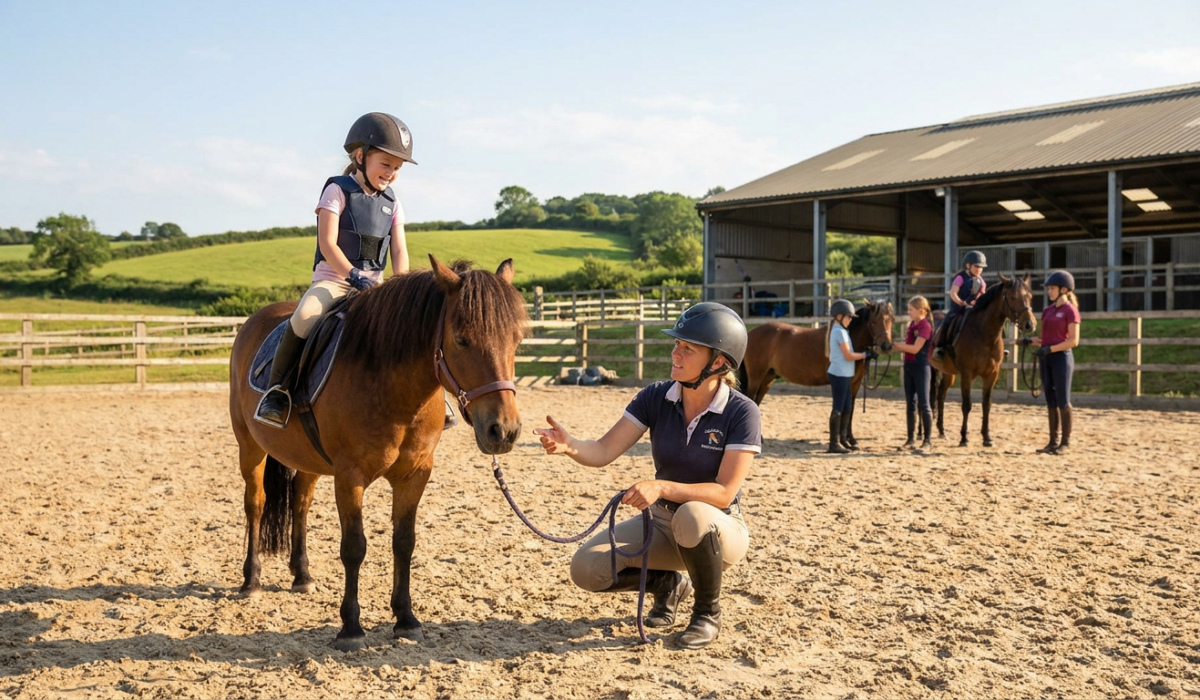
Effective programs maintain small class sizes, typically no more than four to six riders per instructor. This ratio ensures individual attention and immediate feedback when participants need guidance or encouragement. Large groups often leave some children feeling overlooked or rushed through important learning stages.
The curriculum should include both mounted and unmounted activities throughout each session. Spending fifteen minutes on grooming, twenty minutes practicing mounting and basic position, and fifteen minutes on ground exercises creates variety that keeps young riders engaged without overwhelming them.
Progressive milestone systems help track development and maintain motivation. Clear goals like “walking independently for two minutes” or “trotting for thirty seconds” give participants concrete achievements to work toward. These measurable objectives help instructors adjust pacing for individual riders.
Evaluating Facility Safety and Amenities
Safe training facilities provide appropriate arenas with proper footing that reduces slip hazards for both horses and riders. Indoor arenas offer climate-controlled environments essential for summer programs in hot climates, while outdoor rings should have adequate shade structures for rest periods.
Fencing height and construction materials directly impact safety during lessons. Solid rail fencing or appropriate mesh prevents horses from putting legs through gaps while providing clear visual boundaries. Gates should have secure latching mechanisms that instructors can operate quickly if needed.
Storage facilities for helmets, safety vests, and other equipment demonstrate organizational commitment to participant safety. Clean, well-maintained tack rooms indicate attention to detail that extends throughout the entire program operation.
Amenities like restrooms, water fountains, and comfortable viewing areas for parents create positive experiences for entire families. When facilities feel welcoming and professional, families develop trust in the horse riding program’s commitment to their children’s development.
Emergency protocols and first aid accessibility should be clearly posted and easily accessible. Facilities should maintain insurance coverage and emergency contact procedures that give parents confidence in the program’s preparedness for unexpected situations.
Measuring Progress and Long-Term Success
Setting Realistic Goals and Milestones
Effective summer horse training programs establish clear, achievable milestones that build upon each other throughout the session. Rather than focusing solely on riding skills, comprehensive goal-setting includes emotional development, safety awareness, and connection with horses. Young riders typically progress through distinct phases: initial comfort around horses (weeks 1-2), basic handling and grooming confidence (weeks 3-4), and mounted activities with increasing independence (weeks 5-8).
Measurable milestones might include leading a horse independently for 50 feet, maintaining proper posture during a 10-minute walk, or successfully completing a simple obstacle course. These specific benchmarks give participants something concrete to work toward while instructors can track development objectively. The key is creating goals that feel challenging but achievable, allowing young riders to experience regular success that reinforces their growing confidence.
Documentation becomes crucial here. Weekly progress charts that riders help fill out creates ownership of their journey. When a participant sees they’ve progressed from needing assistance with haltering to doing it independently, that visual proof builds momentum for tackling the next challenge.
Parent Communication and Involvement Strategies
Regular communication with parents ensures the confidence-building work continues beyond the barn. Weekly progress updates should highlight specific achievements rather than generic praise. Instead of “Sarah did great today,” effective communication details “Sarah successfully groomed Thunder independently and demonstrated proper leading technique for the first time.”
Parents often struggle with understanding their role in supporting their young rider’s development. Some become overly protective after hearing about falls or challenging moments, while others push too hard for rapid progress. The most successful programs educate families about the natural learning process in equine activities, helping them understand that temporary setbacks actually contribute to long-term confidence building.
Structured parent observation sessions work better than casual drop-ins. When families watch their young rider demonstrate newly acquired skills during youth programs, it creates shared celebration moments that reinforce the rider’s sense of accomplishment. These sessions also provide opportunities for instructors to explain training methods and answer questions about continued development.
Transitioning from Beginner to Intermediate Programs
The transition from beginner to intermediate level represents a critical juncture where confidence can either solidify or fragment. Young riders who’ve spent eight weeks building basic skills suddenly face new challenges that can feel overwhelming without proper preparation. Successful transitions happen gradually, with intermediate skills introduced during the final weeks of beginner programs.
Assessment criteria for advancement should encompass more than just riding ability. Emotional regulation around horses, consistent safety practices, and willingness to attempt new challenges often matter more than perfect equitation. A rider who maintains calm composure when their horse spooks demonstrates readiness for intermediate work, even if their posting trot needs refinement.
Bridge activities help smooth this transition. Riders might participate in short intermediate sessions while still enrolled in beginner programs, giving them preview experiences without pressure. This approach allows instructors to identify areas needing additional foundation work before full program transition.
Building Lifelong Partnerships with Horses
The ultimate measure of successful summer horse training extends far beyond technical riding skills. Young riders who develop genuine partnerships with horses carry confidence and life skills that influence their approach to challenges for years to come. These relationships teach empathy, responsibility, and the reward of consistent effort in ways that translate directly to academic and social situations.
Many participants discover that their favorite program moments happen on the ground rather than in the saddle. Grooming sessions where horses visibly relax, leading exercises where communication clicks, or quiet moments of connection often become the memories that sustain long-term interest in horses. Programs that prioritize these relationship-building opportunities create participants who return year after year, deepening their skills and confidence.
The Ridgecrest community benefits when young people develop these meaningful connections with horses. Participants often become ambassadors for equine activities, sharing their experiences with friends and family members who might never have considered horse involvement otherwise. Summer programs become launching points for lifelong journeys that enrich both individual lives and our local equine community, creating confident young people ready to tackle whatever challenges await them.
Related Posts
- Candee Coffee: Five Decades of Horsemanship in Ridgecrest
- More Than Riding Lessons: C and C Training Stables as a Community Oasis
- Riding Into Inclusivity: Youth Programs and Therapeutic Horsemanship at C and C Training Stables
- Behind the Barn Doors: A Day in the Life at C and C Training Stables
- The Lasting Legacy of C and C Training Stables in Ridgecrest
- Getting Your Horse Ready for Spring Riding Season in Ridgecrest
- Spring Training Tips That Actually Work for New Riders
- Why March is Perfect for Starting Horse Riding Lessons